Friday, December 26, 2014

How I improve my Pronunciation

Hey guys!
I hope you're having a fun and peaceful christmas break. I found some time to finally work on my pronunciation. I've learned that I have some problems with the th-sound, which is why I have been spending and will continue spending time on this topic. In addition to that, I devoted some time to minimal pairs. Let me explain to you in detail how I tackled these topics.

The Two TH Sounds

First of all, I had a look at Rachel's video about the two th sounds. She briefly explains the difference between the th-sounds which is very useful. The exercise at the end of the video didn't help me a lot as it's explained in a rather complicated way (that's what I think at least). So I searched for other sources on the internet and I stumbled upon this website: ESL Gold - Pronunciation - The Voiced TH sound. It provides a list of minimal pairs, challening words, common phrases and an oral reading exercise containing the voiced th sound. I recommend listening to the audio file and reading the words at the same time, because in my view it doesn't make a lot of sense to just listen to the audio without knowing how a word is spelled. For that I would open the audio file in a new tab so you can still see the list of words. BTW, the link to the audio file is on the top right corner, beneath the heading. It's a bit tricky because the link doesn't exactly catch one's eye.
What I like about this website is that the two speakers pause between the words and phrases. It makes it possible to repeat the word, although I must say you could also pause the video manually of course.
I must admit that I found these words quite challenging and that I never paid much attention to the difference between the voiced and unvoiced th sound. But this will be different from now on! ;-)


Minimal Pairs

One source I recently found and would definitely recommend is this website. You can find many many examples of minimal pairs and they even provide a short description of what is important about certain minimal pairs and what the main differences are between to miniml pairs.
What I like most about this website is that it is devided into the different sounds: vowel sounds, consonant sounds, initial consonant sounds and final consonant sounds. Also, the minimal pairs are categorized by elementary, pre-intermediate, intermediate, upper-intermediate and advanced words. I am familiar with most words and their pronunciation of the categories elementary and pre-intermediate, but some of the categories intermediate, upper-intermediate and advanced are really challenging.
Let me give you examples of the category advanced consontant sounds s - θ.
Symbol - thimble
Sawn - thorn
Suds - thuds
Do you think these are difficult?


Practice, Practice, Practice

If you read my previous blog post about vocab learning strategies, you might have realized that I am a great fan of Merriam Webster's dictionaries. On their website, they provide interactive exercises. When doing such an exercise, you first listen to a couple of words and then repeat them. At the end of the exercise, you do a short quiz where you hear a word and must decide to which sound category it belongs to. You can do the quiz a second or a third time.
On the screenshot on the right you can see that I did an exercise on f and v sounds.

I find these exercises really useful. They provide a combination of listening to a word, reading and repeating a word. And there are so many exercises! I just love Merriam Webster! :-D


That's about it so far. Most of these websites do not provide videos where you can watch how natives move their mouth and tongue. But next time I will focus more on sources like this (e.g. Rachel's English). I'll also give you more general hints on how I tackle pronunciation. CU soon, guys!

Tuesday, October 28, 2014

How to go the extra mile

Long time no see, guys. Or shall I say "long time no read"? Welcome back to the 3rd round of Sophie's blogging. A good girl who one day went online and has been crazy about blogging ever since.
I hope your summer break was as fantastic as mine. I will tell you some details about my vacation soon. But for now, let's get back to business. I've spent some time thinking about ways how to efficiently expand my vocabulary. Here is what I came up with.

Books & Mind Maps

I like to work with books where I can highlight things and add comments. That is why I never just borrow books but buy them if they seem to be reliable sources. The Merriam-Webster’s Dictionary of Synonyms and Antonyms, for example, helps me to expand my vocab. and avoid always using words like "good", "bad" or "interesting". It not only provides me with synonyms and antonyms of a certain word, but also with an exact distinction between to words which are believed to be synonyms. Let me give you an example: According to the book, the verbs to devote and to dedicate are not exactly the same. To devote is likely to "imply a giving up [...] because of compelling motives" and to dedicate means "solemn [...] devotion to a sacred or serious use or purpose". So devote is more likely to be used with [to devote] one's free time/evening/etc to studying, whilst one would dedicate one's life to medical research, for instance.
Another Merriam-Webster’s book called Vocabulary Builder is very useful when it comes to learning an entire word family. The words are grouped by family, so for example benefit, beneficent, beneficiary, benevolence, benevolent and benefactor. By remembering the commong root bene, it is easier to memorize the words. At the end of every other unit, there's a short quiz so you can test yourself. As you can see on the picture, I like to create mind maps for those word families.

Another book I would like to mention is the Merriam-Webster’s Guide to Punctuation and Style. This book not only gives me hints and tips about punctuation, but copyediting, quotation, proofreading, word usage and many other topics as well. In spite of all the advantages of such books, and I am also including the Porter Book here, they all have one major drawback: They do not tell you how to pronounce a word. Therefore you need to have an online dictionary handy in order to listen to the correct pronunciation. If I am studying in the train, for instance, and I don't have a laptop with me, learning new vocabulary is almost impossible since I can't listen to the pronunciation properly. This can be quite tiring sometimes.

Online Platforms

When I am online I use online platforms like vocabulary.com or thesaurus.com. On vocabulary.com, in particular, I like to check the use of the word within a sentence. What I also like about the site is that I can create my own vocabulary lists and take vocabulary quizzes.

Even though I benefit a lot from these two websites, I still like to write down words in a small note book which I can take with me anywhere. Just going through a list on vocabulary.com is not enough for me to memorize a word. I always need to write it down by hand. Another website I would highly recommend is the Merriam-Webster's Visual Dictionary Online. Since I am more the visual type when it comes to studying vocabulary and I like to connect words with pictures or symbols, I use this website very often.


Corpora

So far, I haven't used various corpora often enough to be able tell which one is my absolute favorite one and which ones I don't like. One corpus I have used a few times, though, is just-the-word.com. This website has a simple and clear structure and the search results are listed in a very neat way. The user is shown a handful of collocations and how frequently a word or phrase occurs in that corpus. Another website I found very useful is the Oxford Learner’s Dictionary and its Academic Word List. This alphabetically ordered list is linked to the definitions of the words which comes in very handy.


Books and Newspapers

Whenever I read a book and I come across an unknown word, I try to remember it within its context. So for example, when reading one of my favorite books The Shadow of the Wind by Carlos Ruiz Zafón, I found this very interesting word "meekly". This is the sentence in which it occurs: "We could only nod meekly." To nod meekly means "to nod in a humble manner" (source: vocabulary.com). So I assume the person is being embarrassed or even humiliated at that moment. Or the person is simply being a very modest or humble person. Another example sentence of the word meekly is "[...] she was just meekly doing what mother told her to do" (source: Seattle Times). I am more likely to remember this word or the phrase "to nod meekly" because a) I found it in one of my favorite books, b) I remember it with its sentence and c) with the verb to nod.

Another one of my favorites is The Art of Thinking Clearly by Rolf Dobelli. The Swiss author analyses phenomenons of our daily lives which we aren't always aware of. Every once in a while I buy newspapers as they contain loads of vocabulary of a higher register.


Movies and Series

When I watch documentaries or series and I don't understand a word, then I simply guess the meaning of it. So first, I would write down the word, guess what it could mean from the context, and then I look it up in a monolingual dictionary. For example, as I am attending Henry Briscoe's lecture about the Culture of the U.K., I watch a documentary about Great Britain every now and then.
Of course, like almost every student, I watch series. My favorite one is "Pretty Little Liars", although there are currently no new episodes available. I also like watching Game of Thrones (even though I never thought I would ever like this series; I was forced to watch it and then all of a sudden I wanted to watch even more). Anyways... watching (American) series not only helps me a lot to expand my vocabulary, but also to practice my American English pronunciation.

---

This is already the corrected version of the blog post I handed in.
I hope you enjoyed the read. Stay tuned! :)

Friday, June 20, 2014

Culture Days

Since our Culture Days took place on Monday and Tuesday last week, it is high time for me to write about the presentations I watched and, more importantly, which topics I'd like to be tested on at the KGP.


Presentations I watched


Woodstock (US): Of course I've known before what Woodstock. What I didn't know, though, was in how many ways Woodstock had influenced not only music, but also the counterculture movement. The presentation provided a clear outline about the Woodstock's impact on American culture.
http://staysf.com/upload/attraction/20080519164232_san%20francisco%20cable%20car.jpg
San Francisco

San Francisco's rise into popularity (US): Daniela gave a well-structured overview about the evolution of San Francisco. Since I have always loved San Francisco for its exceptional characteristics such as the Painted Ladies, the Lombard Street, the Golden Gate Bridge or the Cable Cars, I couldn't resist watching Daniela's presentation.

Homeland (US): Even though I haven't watched a single episode of Homeland before, I was curious to hear what it is about. had heard a lot about the series and how my friends became addicted to it. What I certainly didn't know about the series is how close to reality the series were.

Arab-Americans after 9/11 (US): I have never really thought about how the 9/11 incident affected Arab-Americans regarding their everyday life. Andreas did a really good job on illustrating the difficulties Arabs in America have to deal with. Thumbs up!

American Indian boarding schools (US): Although I knew beforehand what Judith would be talking about in her presentation, I found the presentation even more interesting than reading the paper. By adding appropriate photos to her presentation, she got across her message perfectly.

http://www.crareacatholic.com/LaSalle/Resources/8th%20Websites%202013/MeLeah,%20Tanya,%20Hannah,%20Becca/Becca%20Fields%20Rev%20War/images/Boston%20Tea%20Party%201.jpg
The Boston Tea Party
The Boston Tea Party (US): Not only did I love Lucinda's accent, but also her topic and her remarkable Prezi. The Boston Tea Party is an event I've heard of several times, but never really known what it is about. What I liked a lot about her presentation was that she pointed out today's opinion of both Americans and British.

Ernest Hemingway (US): Jerneja gave a short but clear overview of Hemingway's life and his most remarkable works. For me, it was great to hear what is typical for Hemingway's style of writing, as I wasn't aware of that before. Well done!

Native American Languages (US): Both intriguing and funny at the same time, Sara talked about some native American languages and how they influenced America's culture. What sounded really interesting to me was that some words or even name of states such as Oklahoma or Mississippi derived from a native American language - I didn't know that before.

Undocumented: Illegal Immigrants in the (US): Valeriya's Prezi was really good as she included statistcs and infographics to illustrate her points. In general, I enjoyed her presentation a lot. The topic is really intriguing and still relevant for Americans.

Health problems of the Irish Travellers (IE): Before watching this presentation, I had no clue that a minority group called "the Irish Travellers" even existed. Aside from telling us who the Irish Travellers are and where they live, Nina focused on the the health problems they have to deal with, such as deafness or asthma. Hearing about those people made me sad, but I liked Nina's presentation a lot!!

The Race Around Ireland (IE): I have never heard about the Race Around Ireland before, but Roman did a great job on telling us the most important facts about it. His presentation was both informative and funny and I could tell that Roman is an insider.

http://mkalty.org/wp-content/uploads/2014/03/Leprechaun.jpg
Leprechaun
The popularised Leprechaun (IE): Of course I've seen and heard a lot about Leprechauns before, but not about its history. So I was curious to hear where the tales originally come from. Linda did not only provide a clear overview over the Leprechaun's history, but also an explanation why the Leprechaun is actually called Leprechaun.

Irish as an official EU language (IE): To be honest, I've heard a lot about the Irish language before, so there were some points I already knew when Dolores talked about them. Nevertheless, she did a good job on putting everything important in a nutshell!

David Norris' contribution to the LGBT Rights in the Republic of Ireland (IE): Before watching Katharina's presentation, I didn't even know what LGBT stands for. Besides explaining this acronym, she told us how these rights were introduced in Ireland and that David Norris as definitely a person worth knowing.


Top five presentations


I would like to be asked about the following topics at the KGP (US):
Arab-Americans after 9/11
American Indian boarding schools
The Boston Tea Party
Undocumented: Illegal Immigrants in the USA
San Francisco's rise into popularity


Image Sources:
(1) http://staysf.com/upload/attraction/20080519164232_san%20francisco%20cable%20car.jpg
(2) http://www.crareacatholic.com/LaSalle/Resources/8th%20Websites%202013/MeLeah,%20Tanya,%20Hannah,%20Becca/Becca%20Fields%20Rev%20War/images/Boston%20Tea%20Party%201.jpg
(3) http://mkalty.org/wp-content/uploads/2014/03/Leprechaun.jpg

Saturday, June 14, 2014

What the Health!

Did you know?
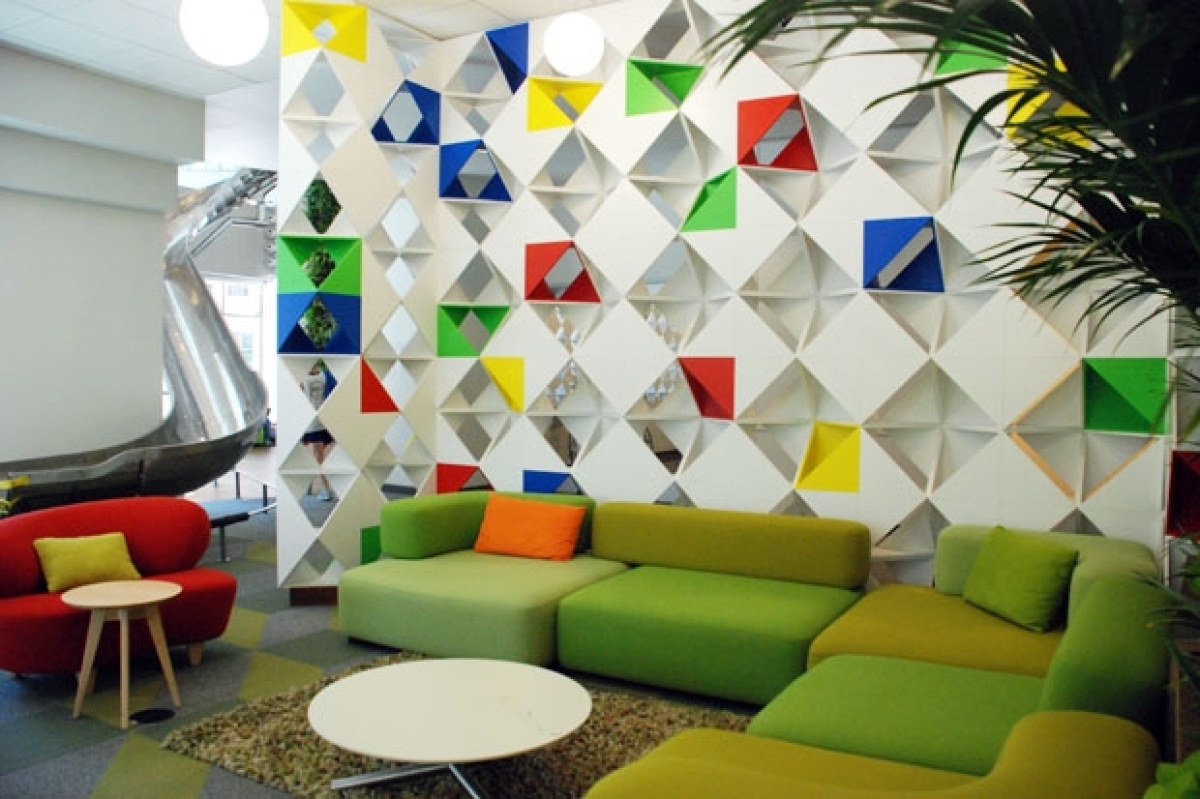
A number of American companies make their employees' day at work not only a happier, but also healthier place. They provide them with healthy meals, open office spaces, fitness classes or even child care centers. As an example, I would like to tell you about an American company in the heart of Silicon Valley: Google.


Google Headquarters, Mountain View, CA


"Let's face it," says Eric Schmidt, "programmers want to program, they don't want to do their laundry. So we make it easy for them to do both." Google's 44,777 employees seem to be damn lucky. Not only is it possible for them to get their laundry done, but also can they go to the hairdresser or even have a doctor's appointment on the 26-acre Google campus in Mountain View, California.


Food, Snacks and Haircuts?
http://img.timeinc.net/time/photoessays/2006/inside_google/google/05.jpg
After enjoying a free gourmet meal in the cafeteria, Google employees can spend the rest of their break playing Ping-Pong, pool or even volleyball. Some of them might even want to go to the on-site hairdresser - for free. Provided by a company called Onsite Haircuts, its mobile homes are travelling around cutting the hair of  "Silicon Valley's tech army."

Back to food and snacks: Throughout the day, the cafeteria offers healthy snacks like dried fruit, nuts or coconut water. Before they decided to offer nuts such as pistachios, some employees "had a serious M&M addiction", Google admits. By the way, all the snacks are available for free. Although, there is one thing Google charges its employees for: machine food. What is that? Machine food is food inside an automat. So you'd have to insert money in order to get food. Google set their prices quite high so as to avoid its employees to buy those rather unhealthy foods and gain weight.

By having about 20 cafeterias on the Google campus, employees can decide on where to go for lunch.


http://www.whereverwriter.com/wp-content/uploads/2013/04/IMG_5693.jpgLeisure Activities

As mentioned above, there are various possibilities how Google employees can spend their breaks. What seemed most intriguing to me was that just recently, Google invented a lap pool. What is a lap pool? It's a very(!) small outdoor pool that is "equipped" with a strong current that allows one to swim and swim and swim - and go basically nowhere! Of course, Google arranged lifeguards in case someone drowns.
http://i.huffpost.com/gadgets/slideshows/250533/slide_250533_1519698_free.jpg?1347647456000
On the entire campus there are numerous lounges where Googlers can just hang out and talk. They're even allowed to bring their dogs to work: "The presence of dogs at Google has been a unique and to some, a treasured part of our workplace culture. Dogs can be a valued and important part of employees' lives, and their ability to keep a dog in their workplace may enhance the quality of their work life."

BTW: In order to make sure that employees make it to meetings in time, they are provided with scooters and, what is even more exceptional, the campus has a slide (yes, a slide!) which can be used instead of taking the stairs.


Health Care

In case Google employees don't have time for a doctor's appointment, they can go for a checkup to an on-site doctor instead. There are even chiropractors and massage therapists on the Google campus. What would you say about a nice massage during lunch break?
I'd like to stop at this point and recommend watching this video as it gives some more insight on how working at Google Headquarters is like. It's worth watching, I promise. Have fun!


Image Sources

(1) www.whereverwriter.com/wp-content/uploads/2013/04/IMG_5682.jpg
(2) http://m.c.lnkd.licdn.com/mpr/mpr/p/3/000/249/1e6/06c0a31.jpg
(3) http://img.timeinc.net/time/photoessays/2006/inside_google/google/05.jpg
(4) http://www.whereverwriter.com/wp-content/uploads/2013/04/IMG_5693.jpg
(5) http://i.huffpost.com/gadgets/slideshows/250533/slide_250533_1519698_free.jpg?1347647456000

Sources

http://greatist.com/health/healthiest-companies
http://content.time.com/time/photogallery/0,29307,1947844_2013328,00.html

Sunday, June 8, 2014

How the Cardiovascular System Works

Hey guys.
Since I have learned a lot about how our heart works within my paramedic courses in 2012, I'd like to share some drawings I made during these courses. I labelled them in English in order to broaden my language skills. I really hope you can learn something from it. By the way, it might be a good idea to look at the drawings every once in a while while you're reading. Otherwise it might be a little confusing as there are LOADS of foreign words (of which some of them are explained below).


How the Heart Pumps Blood


(c) Sophie Schaffner

Our heart is a fist-sized muscle situated behind the rib cage and between the lungs. Since it is placed slightly to the left of the sternum (breastbone), the left part of the lungs is a little smaller than the right one. The heart contracts in order to pump oxygen- and nutrient-rich blood to the rest of your body.

The heart is divided into the right pumping system and the left pumping system. The right atrium (blue color) receives oxygen-poor blood from the superior vena cava and pumps it to the right ventricle (also in blue color). Following that, the right ventricle pumps the blood to the lungs through the pulmonary artery. In the lungs, the blood picks up oxygen and gets rid of carbon dioxide. The left atrium (red color), however, receives oxygen-rich blood from the pulmonary veins and pumps it to the left ventricle. Through the aorta, the left ventricle pumps the oxygen-rich blood to the rest of the body. The aorta (Aorta, Hauptschlagader) is the biggest artery and has millions of smaller arteries branching off. By passing through chest and abdomen, the aorta is responsible for "carrying" oxygen-rich blood to all your organs and cells.

Arteries are blood vessels that deliver oxygen-rich blood from the heart to the cells of your body. They are thick-walled and elastic and their smaller branches are called arterioles and capillaries.

Veins are thin-walled blood vessels delivering oxygen-poor blood to the lungs. Have you ever been wondering why blood in the veins of your feet flows upwards, although, locigally, gravity would keep it down below? Well, some veins have venous valves that set the direction where the blood moves. Thank God! Because otherwise all your blood would be stuck in your feet and ... yeah, you can imagine how your feet would look like.


The Cardiac Conduction System


(c) Sophie Schaffner

The cardiac conduction system generates and controls the heart rate. Have a look at the drawing first and search for the sinoatrial node (sinus node). This is where we start: The sinus node is the heart's natural pacemaker. The electrical impulses are generated here. This electrical signal moves from cell to cell down through the heart until it reaches the atrioventricular node (AV node). The AV node somehow slows the electrical current down. By doing so, the node ensures that the two atria (plural of atrium) can fully contract and pump out blood. After passing the AV node, the electrical current "travels" to the ventricels until it reaches the purkinje fibers (special cardiac muscles). These fibers kind of "tell" the cardiac muscles to contract.

Normally, a sinus node produces a heart rate of 60 to 80 per minute. In case the sinus node is not functioning anymore, the AV node takes over, but can only produce a heart rate of 40 to 60. By the way, the heart rate is the pulse you can feel at your wrist. The blood pressure, however, is something completely different and cannot be explained in just one sentence. If time allows, I will write another blog post and tell you what blood pressure actually is about.

Vocabulary

right atrium (rechter Vorhof) = the right upper chamber of the heart that receives blood from the vena cava
left atrium (linker Vorhof) = the left upper chamber of the heart that receives blood from the pulmonary veins
right ventricle (rechte Herzkammer) = the right lower chamber of the heart that receives blood from the right atrium and pumps the blood into the arteries
left ventricle (linke Herzkammer) = the left lower chamber of the heart that receives blood from the left atrium and pumps blood into the aorta
pulmonary artery (Lungenarterie) = an artery which carries blood from the heart to the lungs
venous valves (Venenklappen) = a structure that prevents blood from flowing backwards and therefore ensures a one-way flow
sinus node (Sinusknoten) = special part of the heart that controls the heart beat and heart rate
av node (AV-Knoten) = a node that receives impulses from the sinoatrial node
electric current (elektrischer Strom) = a flow of electricity 

Sources

Sanitätshilfe - "Ausbildung", Auflage Februar 2012, Herausgeber: Österreichisches Rotes Kreuz
http://flexikon.doccheck.com/de/Herz#Anatomie
http://www.webmd.com/heart-disease/guide/how-heart-works 

----

Any questions? Feel free to add a comment! :-)

Thursday, June 5, 2014

Apple - A History of Advertising

When someone mentions the words "Apple" and "foundation", one might immediately think of Steve Jobs. However, Steve Jobs didn't launch this company all on his own. Together with Steve Wozniak and Ronald Wayne, Jobs established Apple Inc. on April Fool's Day in 1976. They named the company Apple because Jobs was just coming back from working on an apple farm and he thought the name was "fun, spirited and not intimidating".

The Evolution of Apple's Logo

Unlike other companies like Coca Cola, Apple Inc. has had only three logos since the company's foundation.
The first logo was designed in 1976 by co-founder Ronald Wayne and shows Sir Isaac Newton sitting under an apple tree and an apple hanging down a branch. On the outside border of the logo, there is a phrase saying: "Newton... A Mind Forever Voyaging Through Strange Seas of Thought ...Alone". Since the first logo was poorly recognizable, it was replaced by the second logo only a few months later. Designed by Rob Janoff, who became quite famous for designing the "rainbow Apple", the logo shows a colorful apple with a bite taken out of it. Steve Jobs and his designer Rob Janoff didn't want people to confuse the apple with a cherry or a tomato, which is why they added the bite to the apple. Additionally, Job suggested to put the green color on top to make it look more like an apple. The third logo was introduced in 1998 as some said the colorfully striped apple would look ridiculous on the new iMac. Jobs wanted to keep the Apple, so they simply changed the color to grey.

Apple Logo Evolution Old Logos

If Jobs & Co. hadn't decided on changing the color to grey in 1998, the MacBook would probably look like this today. I guess Apple made the right choice.


Apple's History of Advertising


Retrospective and Evolution of Apple AdsApple I

Back in 1976, when Apple was just getting off the starting blocks, its founders introduced the Apple I, a personal computer, and sold it for $666.66. When you have a look at the advertising on the left hand side, you can see that there is a lot of text, one low-quality picture and Apple's first logo. What do you think about this advertising? Does it look appealing to you? Well, to me, it doesn't look attractive at all. You can't even make out what's on the picture on the top right corner. At least I can't. For me, there is way too much text on this ad. Imagine this advertisement as a poster next to a sidewalk. Would you stop walking in order to read it? Would you be able to tell at a glance what this ad is about?


Retrospective and Evolution of Apple AdsApple II

Only one year after Apple's foundation, Wozniak invented another computer called Apple II. Although it had the same processor in and run at the same speed like Apple I, the Apple II was way more popular than the first one.
The advertisement on the right hand side looks a lot more concise, don't you think? There is very little text and just one photo of a specific fruit. Guess what, it's an apple! Still, I believe that the apple is photoshopped. Just look at its colors! It looks like the apple from Snow White. That's at least what I think.


http://cdn.theatlantic.com/newsroom/img/posts/Apple-II-III-ads.jpgApple III

Although Apple II was quite a success, they decided to invent a new model with an even better system. The Apple III was proudly introduced in 1980, but it soon became apparent that the system wasn't as good as expected. Jobs didn't want the computer to have a cooling fan since it was "too noisy and inelegant". Therefore the motherboard of the computer got really hot after a while which resulted in system malfunctions. In addition to that, there were some other softwares that didn't work properly. So Apple replaced these "bad" Apple IIIs and introduced another version of Appe III, which, unfortunately, still had some problems.

What do you think about the advertisements? There was a series of these posters and each of them was dedicated to an American entrepreneur. Even though the ad contains a lot of text, I really like the idea of referring to notable inventors like Edison or Ford. When reading the heading, one might think: Ok, so what makes Apple so exceptional to even compare themselves with Edison or Ford?
 

Apple Lisa

The Apple Lisa is not only named after a girl (Steve Jobs' daughter's name was Lisa), but also stood for "Local Integrated Software Architecture". What made Apple Lisa so special? It was the very first Apple computer to have Graphical User Interface (GUI). That means that you were able to point and click with a rolling device called "mouse". Before that, the computers were text-based, which means that one had to type in commands in order to make the system respond.
Have a look at the video-ad below. I don't know about you, but I think this video is creepy! Just see for yourself.


Retrospective and Evolution of Apple AdsMacintosh

Introduced in 1984, Macintosh was a line of personal computers developed by Steve Jobs. Like the Apple Lisa, Macintosh had GUI and a mouse.
Have a look at the advertisement. On the bottom left corner, there is a picture of someone using a mouse. The text in the pic says "If you can point, you can use Macintosh." Also, on the bottom right corner, where you can see the colorfully striped Apple logo, it says "Soon there'll just be two kinds of people. Those who use computers and those who use Apples." Well, this is quite a self-assured statement, don't you think?


https://blogger.googleusercontent.com/img/b/R29vZ2xl/AVvXsEgvBw6zNAMTDPkFhumJfHhHwmHNK0lGPFKyVey9Iyh2oSyJr4-9AeYdK3KWsnixXxQyowce5NlB10sJxEU9I4-VG7Df_ClWhEzyqb_XKLaHTvLg_UjYxKnQeKNwzJrXPSErLweAPu0YMiw/s1600/Think_Different_Apple-1998-771623.jpg"Think Different"

The advertising campaign "Think Different" was introduced in 1997 and mainly used for TV commercials and print ads.

The commercial as well as the ad show several personalities of the 20th century who, according to Jobs, "thought different" and "changed things": Albert Einstein, Martin Luther King, Jr., Thomas Edison, Mahatma Gandhi or Pablo Picasso. Have you ever seen this ad before? What do you think about it?


"Get a Mac"

Another campaign created by Apple's advertising agency was "Get a Mac". The TV campaign, which ran from 2006 to 2009, tells the story of a PC and a Mac being compared to each other. One guy dressed in casual clothes and personifies a Mac and the other one is dressed more formally and represents the (Windows) PC. The commercial was broadcasted in almost every English speaking country as well as in Japan. It was even dubbed into Spanish, German and Italian.
The actual ad lasts about an hour or so, so it gets a bit boring after a while. However, here's a shorter version that shows the ten most humorous statements. If you haven't seen it before, you should definitely watch it. It's hilarious.


Sources:
http://www.adweek.com/adfreak/story-behind-apple-logos-evolution-11672
http://webexpedition18.com/articles/evolution-apple-ads/
http://en.wikipedia.org/wiki/History_of_Apple_Inc.#Apple_IPO 
http://oldcomputers.net/ 
http://en.wikipedia.org/wiki/Get_a_Mac

Image Sources:
(1) http://famouslogos.net/images/apple-logo-evolution.jpg
(2) http://edibleapple.com/wp-content/uploads/2009/04/maacbookcolor.jpg 
(3) http://webexpedition18.com/wp-content/uploads/2011/10/1976apple01.jpg
(4) http://webexpedition18.com/wp-content/uploads/2011/10/1977apple05.jpg
(5) http://cdn.theatlantic.com/newsroom/img/posts/Apple-II-III-ads.jpg
(6) http://webexpedition18.com/wp-content/uploads/2011/10/1984apple34.jpg
(7) https://blogger.googleusercontent.com/img/b/R29vZ2xl/AVvXsEgvBw6zNAMTDPkFhumJfHhHwmHNK0lGPFKyVey9Iyh2oSyJr4-9AeYdK3KWsnixXxQyowce5NlB10sJxEU9I4-VG7Df_ClWhEzyqb_XKLaHTvLg_UjYxKnQeKNwzJrXPSErLweAPu0YMiw/s1600/Think_Different_Apple-1998-771623.jpg

Sunday, June 1, 2014

Capitalization 101 - Part One

Since the writing parts of the Progress Checks have always been the ones I had to struggle most with, I am currently reading a lot about Punctuation and Style. Today, however, I'd like to talk about Capitalization and its abundant rules about beginning a sentence. I hope the following information and tips are helpful to you.

Beginnings

  1. Surprise, surprise: The first word of a sentence is capitalized.
    Example: Blogging is a great opportunity to practice writing.

  2. If a sentence is placed in parentheses, the first word of the sentence is capitalized.
    Example: Blogging is a great opportunity to practice writing. (There are a lot of other possibilities, of course.)

  3. If a sentence inside another sentence is in parentheses, the (inner) sentence is not capitalized.
    Example: Blogging is (among lots of other possibilities) a great opportunity to practice writing.

  4. The first word of a quotation is capitalized.
    Example: "Blogging is a great opportunity to practice writing," my teacher says.

  5. If a quotation is interrupted in the middle, the second part of the quotation is not capitalized.
    Example: "Blogging is a great opportunity to practice writing," my teacher says, "but there are loads of other possibilities."

  6. If a quotation is dependent on the sentence in which it appears, the quotation is not capitalized.
    Example: Blogging is "a great opportunity to practice writing."
    Or: My teacher said that "blogging is a great opportunity to practice writing."

  7. If a motto, rule or direct question, whether a quotation or not, appears in another sentence, it is capitalized.
    Example: The question is, How many blog posts do we need to have by the end of the semester?
    Or: You know the saying "Practice makes the master."

  8. The first word following a colon is usually lowercased when it begins a list or even a complete sentence. When the sentence, however, is longer and seperate from the preceding one, the first word is capitalized.
    Example: A good language learner practices these four language skills: reading, writing, listening and speaking.
    Or: A good language learner has the following characteristics: he is open-minded, communicative and eager to learn.
    But: One more thing: A good language learner must neither be idle nor biased, but curious about different countries and cultures.

  9. The first word in an outline heading begins with a capital.
    Example:
    1. Introduction
    2. Body Paragraph
      1. Thesis I
      2. Thesis II
      3. Thesis III
    3. Conclusion

  10. The first word and some particular words of a salutation of a letter are capitalized. As far as the complimentary close is concerned, the very first word begins with a capital.
    Example: Dear Sir or Madam; Ladies and Gentlemen
    Or: Sincerely yours; Truly yours
Source: Merriam-Webster's Guide to Punctuation and Style, Second Edition

Friday, May 23, 2014

May I introduce Tim Berners-Lee?

Since I devoted a lot of time and effort to my Culture Paper which is about "Great American Entrepreneurs", I decided to introduce to you another great entrepreneur in this blog post. But I don't want you to be bored to hear about Americans all the time, so I am now going to write about a British entrepreneur.

Born and raised in London, Tim Berners-Lee studied physics at the University of Oxford for about three years, but in the end became a computer scientist. Tim is best known for being the inventor of the World Wide Web.
Berners-Lee had been working as a software engineer at CERN in Geneva, Switzerland, for several years. In 1989 he came up with the idea of the WWW. Coming from all possible continents, the people working at CERN were gathering in Geneva in order to work on their projects. After returning to their home countries, they wanted to keep in touch and exchange data. Doing so over the telephone or via air mail was both pricey and laboriously. Tim unterstood their problem and thought of an idea how to connect the computers they were working with, even when being a thousand miles away from each other. Thereupon Tim Berners-Lee invented three technologies which are today the basis of the World Wide Web:
  1. HTTP (Hyper Text Transfer Protocol) is a protocol that defines how information is transmitted and tells, so to say, the web browsers and servers what to do. The acronym "http" or "https" is placed in front of every Internet address (URL).
  2. HTML (Hypertext Markup Language) is a language used for creating web pages. The language consists of certain elements which are "read" by the web browser (Google Chrome, Mozilla Firefox, Internet Explorer, Safari, etc.).
  3. URI (Uniform Resource Identifier) identifies the name and location of a resource (e.g. a file or a Internet address). A URI would look like this: /images/bernerslee.jpg, whilst a URL, which is similar to the URI, would look like this: http://www.blogger.com/images/bernerslee.jpg.

Based on these three technologies, Tim Berners-Lee created the World Wide Web. The world's very first website, info.cern.ch, was launched in 1991 and outlined the concept of the WWW. If you like to read more about the invention of the World Wide Web, feel free to visit this website. Or you could watch this TED video of Tim Berners-Lee talking about his invention. It's about 16 minutes, but it's definitely worth watching.


Today, Berners-Lee is a professor in the Electronics and Computer Science Department at the University of Southampton (UK). Also, he founded and is currently leading the World Wide Web Consortium (W3C), an organization working on the development of the WWW. Although Berners-Lee invented today's most dominant communication medium, he is not considered one of the wealthiest persons in the world.

Sources
http://www.bbc.co.uk/history/historic_figures/berners_lee_tim.shtml
http://webfoundation.org/about/sir-tim-berners-lee/
http://www.webopedia.com/TERM/H/HTTP.html
http://www.techterms.com/definition/uri
http://www.ted.com/speakers/tim_berners_lee

Image Sources
http://3ehspg3e85cn1oz25ebdof7cd3.wpengine.netdna-cdn.com/wp-content/uploads/2012/06/timbernerslee.jpeg

Friday, May 16, 2014

Being a Paramedic For One Day

Hey guys! :-)
Since we're currently covering the topics Health and Medicine, I would like to tell you how a typical 12-hour shift within the Ambulance-Services looks like. As you might have read in some of my preceding blog posts, I work as a voluntary paramedic at the Austrian Red Cross in Linz. I've made the experience that lots of people don't really know what a paramedic does all day long. Most of them assume a paramedic works in a hospital. That's completely wrong! So let yourself plunge into my world of  "being a paramedic (for one day)".

06:30 am - Getting ready for the shift

A typical shift starts at 7 am, which is why you need to check if the ambulance car you'll be driving with is OK. What does that mean? Within an ambulance car, you have a number of various equipment. All this equipment needs to be checked if it's working (e.g. the stretcher [folding bed used to transport the injured]), if it's still usable (e.g. the antiseptic) or how much oxygen you still have aboard (see the portable oxygen cylinders in the second picture). If everything's alright, you tell the dispatchers (the ones who take the calls and then send out the vehicles) by radio that you are available. Have a look at the pictures what we have in our ambulance cars (among lots of other stuff).


07:00 am - Ready to rumble!

Now that the dispatcher knows we're on standby, we might receive a call soon. We don't know what's going to happen next or which kind of patient we're going to get. Maybe it's just an elder woman who is living alone, toppled and can't stand up on her own. Or we assume the worst and we could be sent to a car accident. Anything can happen!

7:44 am - Our fist mission

Beep, beep the radio goes. It's time to save the world.

Yeah, About that phrase... Many people become a paramedic because they believe they are going to save the entire world. Not quite. I don't know about my colleagues, but I have never saved the whole world before. And I suppose I won't do so any time soon. Being a paramedic isn't always about saving someone's life. Instead, we provide first aid in order to relieve the suffering of individuals. Frequently, we pick up our patients at home to bring them to the hospital. For instance: A patient has their leg in a plaster cast and can't go to the hospital on their own. In order to make the doctor's appointment at the hospital happen, we fetch the patient and transport them there. So let's not say we save the world, but rather try to ease someone's pain by giving first aid or giving someone a ride.

Have a look at the picture on the right hand side. This is what our terminal looks like. For those of you who speak German, you'll find that no trouble to understand. There are a few abbreviations, though, which even German speakers might not be familiar with.

So let's have a closer look:
EO stands for Einsatzort, which means the place where something happened (e.g. an accident) and we therefore need to go to in order to help our patients; the Irish Red Cross calls it the incident location.
Dia stands for Diagnose, which means diagnosis. In this particular case we have a patient who suffers from Tachykardie (tachycardia). The prefix tachy- says that something is accelerated whilst cardio/cardia is always linked to the heart. If we have problems with our heart, for example, we would see a cardiologist.
Pat stands for Patient (patient). Our dispatchers always suggest to which hospital our patient should be brought. In this case it says nach AKH. That means we'll bring our patient to the general hospital.
KEO stands for Koordinaten Einsatzort and tells us the exact coordinates of our incident location.
In the very last line we come to know that a GP had a look at the patient already and finds it necessary to bring him to the hospital. (HÄND war vor Ort).

How will we treat our patient?
Our patient suffers from tachycardia, which means that their heart beats really really fast right now. First of all, we will tell our patient to breathe calmly. One of us will feel their wrist to check the pulse. A normal heart beat is about 80 (+/- 20) per minute. Our patient has a pulse of 130(!). We also take their blood pressure, which turns out to be at a normal rate (120/80). The most important thing now is to quickly bring our patient to the hospital. While driving to our destination, the patient should sit up straight as that's easier to breathe. After the patient is brought to the emergency room, we will drive back to our station and hopefully have some coffee there.


10:13 am - The next mission's certain to come.

After having a longer break at the station, the radio beeps again. This time, the beep goes way faster and louder. There are two different radio sounds: the slower one tells us that it's not a matter of life and death, but the faster one does. So we'll finish our coffee quickly and get started.

On our terminal we get to know the following: In the first line the dispatchers tell us that we have to turn our flashing blue light on ("Blaulicht"). The diagnosis says bewusstlos, which means unconscious. In the penultimate line we get to know that a doctor on emergency call is going to be there as well ("NEF 1 ebenfalls").

Since our patient is unconscious, we need to place them in recovery position. I am not going to explain here what the recovery position is about. If you like to read a more detailed explanation how to place someone in recorvery position, have a look at one of my previous blog posts called "How to place someone in Recovery Position". What's more is that we will administer oxygen to our patient in order to make their breathing easier. We'll also cover our patient with a blanket made of aluminum. We don't want them to feel cold, do we?
Generally speaking, since a doctor was sent to the incident location too, he's the one to call the shots. We'll place the patient on the stretcher, of course still being in recovery position, and set off. After dropping the patient off at the emergency room, we drive back to our station and have a break.


12:30 pm - Enjoy your meal!

I'm starving! When volunteers work the day shift, they get coupons to get free lunch at one of the hospitals in Linz. Most of the time, we receive coupons from the "Landes- Frauen- und Kinderklinik" - a hospital that emphasizes on toddlers, children and expectant mothers.

This is how a typical lunch in a hospital looks like. What do you think about it? Does it look delicious to you? Would you call it "gourgeous" as Jamie Oliver always does?


04:47 pm - Last but not least.

What we have here is something that we experience in almost every (night) shift: alcohol abuse. No, we're not the ones , but our patient. Sadly, like in every bigger city, there are people living in a poorhouse or even on the street. Actually, we don't transport these kind of patients to the hospital because they have a problem with alcohol. Instead, we bring them there because when they are drunk, they do silly things like sleeping outside or trip and fall. We neither want them to feel cold, nor do we want them to bleed or feel pain. 

It can be a bit nerve-wracking to pick up a drunk guy who talks a lot of nonsense or might even be aggressive. In case a patient is aggressive, I call the cops so that they escort us to the hospital. It's a lot more secure for us paramedics to have a police officer on our side.

What will we do with this patient?

Well, the most important thing is to, again, bring the patient to the hospital. Before that we'll feel their wrist to check the pulse and take a blood sample so as to measure their blood sugar. If the person had been sleeping outside, we make sure to cover them with a blanket. Otherwise the patient might suffer from hypothermia. What does that mean? Hypo always refers to something that is below a normal frequence or value. In contrast, hyper means that something is above a certain value. "Thermia" refers to temperature, which means that hypothermia is when your body temperature gets low so that it even might endanger yourself.


06:45 pm - Exhausted, but satisfied.

Our shift is drawing to an end. For twelve hours we've been available for people in need. We didn't exactly save the world. Instead, we tried to ease people's pain and bring them to the hospital. That's actually a lot. Even when we're quite exhausted right now, we can be proud of ourselves!

If you have any questions on that, please don't hesitate to text me! :-)


image source (1): http://www.roteskreuz.at/typo3temp/imagegallery/450_450_16329_T5%20-%20Seiteneinstieg.JPG
image source (2): http://www.roteskreuz.at/typo3temp/imagegallery/450_450_30703_P4120113.JPG 
image source (3): http://www.roteskreuz.at/typo3temp/imagegallery/450_450_16328_T5%20-%20Verbandkoffer.JPG
iamge source (4): http://www.roteskreuz.at/typo3temp/imagegallery/450_450_16331_T5%20-%20Heck%20offen.JPG
image source (5): (c) Manuel PIRKLBAUER
image source (6): (c) Manuel PIRKLBAUER
image source (7): (c): Werner SCHIER
image source (8): (c): Manuel PIRKLBAUER

Saturday, May 10, 2014

10 foods that keep you hale and hearty

Hey guys! :-)

As I might have told some of you before, I am living in a dorm in Graz and therefore cooking for myself. I always try to have lots of vegetables, fruit and other nutritious crops. I've been browsing through the web a lot lately and found some interesting information about foods that are essential for a healthy diet:

1. Green Tea

http://www.deltalabsusa.com/assets/client_files/images/Photos/Food%20and%20Drink/green-tea.jpgHealth benefits: Reduces skin damage, reduces level of stress, ideal for losing weight

Green tea consists of certain antioxidants that prevent cell damage and slow down skin aging. According to a Swiss study, people's brains were much more active in the working and memory areas when drinking green tea. Additionally, green tea allows you to calm down and relax. A Japanese study found out that the levels of stress were 20% lower in people who drank green tea than in people who did not. Green tea is a smart substitution for sugary drinks and therefore ideal for losing weight. That is because green tea changes the metabolism so that more calories are burnt.

Tip: Green tea should not be prepared with hot boiling water, but rather with water between 160 and 170 degrees. Otherwise, some important vitamins and antioxidants get lost. Adding one or two slices of lemon would be a good idea. Lemons contain loads of vitamin C which make the compounds of green tea way easier to absorb. Make sure not to combine green tea with dairy products (like milk or yogurt), as they make the absorbing process harder for your stomach.


2. Dark Chocolate

http://i247.photobucket.com/albums/gg158/MDA2008/MDA%202011/dark_chocolate.jpgHealth benefits: Decreases fatigue, reduces level of stress, helps treat depression, relieves menstrual cramps

According to a recent research, 1.5 ounces (some 28 grams) of dark chocolate a day for two weeks immensely reduces the stress level. Milk chocolates can be helpful as well, but not as much as the dark one. Chocolate contains antioxidants which are better absorbed without milk added. Besides, studies have shown that eating a few pieces of dark chocolate three times a week can lower blood pressure. It also improves the blood flow resulting in a significant decrease of risk of arteriosclerosis.
As you might be aware of already, chocolate makes you happy and boosts your mood. Chocolate even contains substances that could potentially make you high. But you would have to eat between 20 and 30 kg (200 to 300 bars of chocolate) to eventually become high!

Tip: Keep in mind that dark chocolate, or chocolate in general, should be consumpted in moderation because it is high in sugar. 


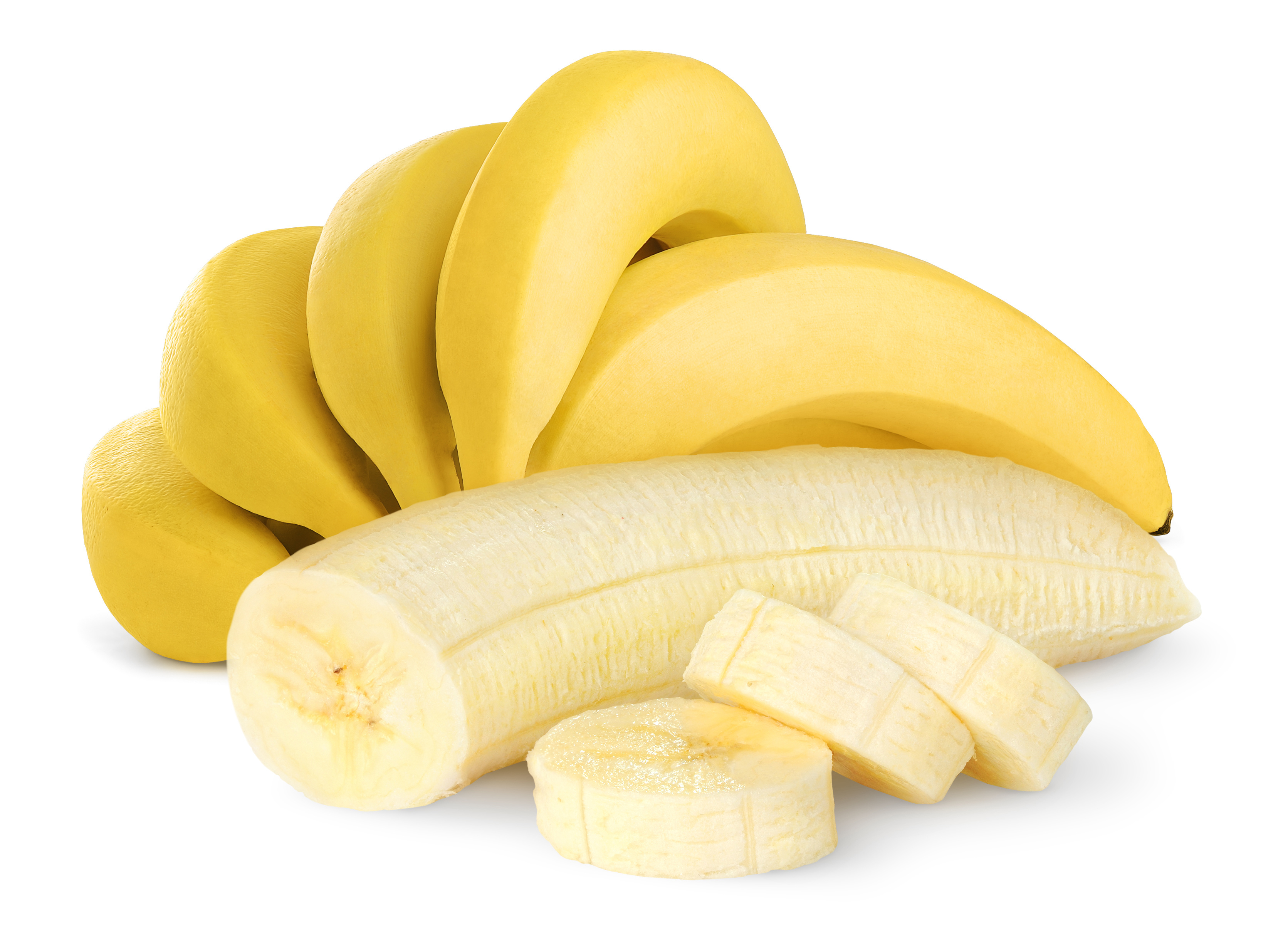
3. Bananas

http://romanlosangelez.files.wordpress.com/2014/01/banana2.jpgHealth benefits: Lowers blood pressure, helps reduce incontincene, relieves menstrual cramps, regulates blood pressure, promotes bone health

Bananas have a lot of health benefits. To illustrate, it prevents the bones from becoming thin and weak. Additionally, according to a study, fresh bananas protect the stomach from developing wounds or even ulcers. That is because bananas promote the production of a thicker mucus that prevents stomach acids. Bananas are also helpful for elimination problems and diarrhoea. By containing a high amount of pectin and fiber, bananas help normalize the movement of the digestive tracts and therefore ease constipation. Consuming three or more fruits per day reduces the risk of age-related vision loss. Especially bananas are fruit that protect your eye sight.


4. Whole grains

http://www.jessainscough.com/wp-content/uploads/2011/05/wholegrains.jpgHealth benefits: Increase concentration, ideal for losing weight

Whole grains like wheat, oats, einkorn or quinoa are ideal for losing weight. When trying to lose weight, products like whole wheat flour, bread or pasta can be really helpful. What's more is that whole grains boost concentration, especially when you have whole grain cereals for breakfast. It helps you to stay focused. Skipping breakfast results in poor concentration and fatigue, so try to have breakfast every day. In addition, whole grains reduce the risk of diabetes.

Quinoa: Quinoa is packed with proteins, magnesium and iron and a grain crop that is easily digestible. What's more is that Quinoa is gluten-free and helps relieve migraines. The NASA considered Quinoa an optimal crop for long-duration space flights.

Oats: Oats is a cholesterol-lowering grain that consist of calcium, magnesium and other essential vitamins. Basically, oats lack gluten. They are, however, grown next to wheat and other grains so that they are contaminated with glutens. So officially, oats is a gluten-containing crop.

Tip: What about starting the day with a healthy and delicious porridge?


5. Yogurt

http://cdn1.scdlifestyle.com/wp-content/uploads/2010/08/how-to-make-yogurt-1.jpgHealth benefits: Helps relieve indigestion, prevents osteoporosis

Yogurt is rich in bacteria and calcium that helps your stomach digest and reduce constipation and diarrhoea. Along with that, yogurt lowers the risk of osteoporosis, which is an illness that weakens bones and increases the risk of unexpected fractures. Combined with vitamin D, yogurt has a positive effect on bone mass. Vitamin D can be found in eggs, oily fish like sardines and salmons or powdered milk. In some yogurts, vitamin D is already added.

Tip: Enjoy your yogurt with fruit as they contain a lot of vitamins and add a pleasing taste.


6. Maca

http://www.organicmeetsgood.com/wp-content/uploads/2013/04/maca-2.jpgHealth benefits: Boosts concentration, prevents sexual dysfunction, promotes fertility

Maca, a root vegetable which looks similar to a radish, helps to balance hormones. Some consider it an aphrodisiac as it might also arouse sexual desire. The root helps women with menstrual problems and prepares them for pregnancy by supplying certain hormones. Moreover, maca serves as an energy and concentration boost.

The plant originally comes from Peru. Some hundred years ago, the Inca consumed maca as a vegetable due to its nutritional values. They boiled, fried, roasted or dried the root and even ate it to prevent lung problems.


http://www.supergreenlandmarket.com/1/wp-content/uploads/2012/12/leafy-greens.jpg 7. Leafy greens

Health benefits: Boosts concentration, prevents cell damage

Leaf vegetables such as broccoli, spinach, lettuce, arugula, asparagus or cabbage are brimming with fiber and vitamin E. They help you to keep mentally focused and prevent your brain cells from damage. Leafy greens are low in calories and fat and high in proteins, magnesium and other vitamins. Especially spinach, which is known to be Popeye the Sailor's favourite vegetable, is rich in iron, calcium and other nutrients. Also cabbage is good for your digestion and heart and is believed to lower the risk of cancer. Generally speaking, leafy greens are very low in calories. One-half cup of cabbage, for instance, contains only 15 calories.

Tip: If you're not really fond of leaf vegetables, try to add them to dishes that you like. You might also want to try out new vegetables like Swiss chard, mustard greens, bok choy, celery, watercress, ...


8. Garlic

http://detoxforlife.biz/wp-content/uploads/2014/04/garlic.jpgHealth benefits: Relieves common colds, protects blood cells, prevents sexual dysfunction

Garlic, also known as "the stinking rose" due to its pungent smell, reduces the chance of catching a cold and also helps to recover from a cold. What's more is that garlic boosts your mood and improves sexual performance. Besides, garlic is a great source or vitamin C and able to keep your blood pressure under control. By protecting your blood cells and vessels it prevents you to suffer from inflammatory.

Tip: It's most effective when you eat garlic raw.


9. Fish & Seafood

http://instantpot.com/wp-content/uploads/2009/06/sea-food.jpgHealth benefits: Relieves common cold, relieves migraine, prevents sexual dysfunction

Fish and seafood strengthen your immune system and lessens the frequency of catching a cold. When having a cold or the flu, oily fish like salmon, mackerel and tuna help a lot. Fatty fish like sardines, herrings and trouts, however, reduce the frequency of migraines. Since Inuits have low levels of heart diseases, eating fish regularly might protect the heart and lower the amount of cholesterol. As you might know, fish contain Omega 3 which lowers the chance of inflammations, protects against Alzheimer and recudes the symptoms of ADHD.

Shellfish: By containing a great amount of vitamin B12 and zinc, shellfish reduce the risk of miscarriage.

Oysters: Oysters are rich in zinc and therefore also considered as a aphrodisiac.


10. Nuts

http://www.nutstop.com/media/catalog/product/cache/1/image/9df78eab33525d08d6e5fb8d27136e95/d/e/deluxe-mixed-nuts-roasted-unsalted.jpgHealth benefits: lessens sleep problems, prevent coronary heart diseases

Nuts are loaded with vitamins which reduce the chance of suffering from a coronary heart disease. Most nuts might possibly be able to lower the risk of cancer, but that's not scientifically proven yet.
Walnuts: Especially walnuts improve the quality of sleep. Additionally, the fruit helps the body to protect itself against Parkinson, Alzheimer or type-II diabetes. Some important vitamins in walnuts cannot be found in any other food, which makes this kind of fruit quite special.
Almonds: While being rich in vitamin E, magnesium and calcium, almonds lower cholersterol and the risk of suffering a heart disease.

Tip: It's healthier to eat them raw and with the skin as more than 90% of the vitamins are found in the nuts' skins.

-

image source (1): http://www.deltalabsusa.com/assets/client_files/images/Photos/Food%20and%20Drink/green-tea.jpg
image source (2): http://i247.photobucket.com/albums/gg158/MDA2008/MDA%202011/dark_chocolate.jpg
image source (3): http://romanlosangelez.files.wordpress.com/2014/01/banana2.jpg
image source (4): http://www.jessainscough.com/wp-content/uploads/2011/05/wholegrains.jpg
image source (5): http://cdn1.scdlifestyle.com/wp-content/uploads/2010/08/how-to-make-yogurt-1.jpg
image source (6): http://www.organicmeetsgood.com/wp-content/uploads/2013/04/maca-2.jpg
image source (7): http://www.supergreenlandmarket.com/1/wp-content/uploads/2012/12/leafy-greens.jpg
image source (8): http://detoxforlife.biz/wp-content/uploads/2014/04/garlic.jpg
image source (9: http://instantpot.com/wp-content/uploads/2009/06/sea-food.jpg
image source (10): http://www.nutstop.com/media/catalog/product/cache/1/image/9df78eab33525d08d6e5fb8d27136e95/d/e/deluxe-mixed-nuts-roasted-unsalted.jpg