Showing posts with label tips. Show all posts

Thursday, January 29, 2015

Straining every nerve - American Accent Training

Heeey guys! :-)
I hope you're all doing well considering how many exams we're having this month. This is the very last week of this semester, guys, so let's keep up and get it over with.

Since the title of this blogpost is called "American Accent Training" you're probably expecting some of my strategies on how to improve my American pronunciation. If you want to know my general approach to a better pronunciation, feel free to read through my first blog post on pronunciation.

I must admit I am very late with this blogpost. The reason why is simply because I haven't found a third source on American Accent Training which I could recommend. I mean, there were many useful links which provided a handful of exercises and stuff, but none of them really got me hanging on. But after having tried out Rachel's and Amy Walker's English tutorials, I finally found a third source which I found worth sharing with you.

1. Rachel's English


Rachel clearly is a professional when it comes to (teaching) pronunciation. What I really like about her YouTube channel is that she has very specific topics, like "the TH Consonants" or "Contractions". She even has a few videos about Homophones.
As I mentioned in my first blog post about pronunciation, I really like doing Minimal Pairs, because it's not only a very effective but also a funny way to deal with pronunciation. And Rachel even has a playlist containing five videos about minimal pairs. I loooove these.
Another thing I like about her very professional videos is that the IPA sounds are displayed on the screen while she's pronouncing them. Also, the words she is talking about are displayed, so you can read them and repeat after her. The repeating is a very essential part of the pronunciation training. How are you going to improve your pronunciation without trying it out yourself? So that's why I like it a lot that she always pauses after a word so you can repeat it. Another advantage of such video tutorials is that you see how a native - in this case Rachel - moves her mouth. She (and Amy Walker as well) also explains which muscle movement is necessary for a certain sound. So far, I have benefited a loot from her tutorials.


2. Amy Walker


To be honest, I was a bit sceptical in the first place. Amy Walker seemed to me like a very friendly, but almost too friendly person. She smiles as if - well I don't know, but definitely too much, as it it was a fake smile. Anyways, I watched her tutorials since it is my goal to acquire an American accent. This is the link to her tutorials, by the way. Although I wasn't sure if she is the right person to teach me pronunciation (because of her exaggerated smile which I initally almost couldn't stand), I must say I really enjoyed it and I think she is doing a good job when explaining the differences between two siminar sounds. What I really like about her tutorials is that she provides a worksheet. I like having a sheet of paper right next to me so I can take notes if necessary. Her example words and sentences are really good, and there are many words which I use every day but have never really paid attention to their correct pronunciation.

She also has a video where she speaks 21 different accents. That's a really funny one, alhough I must say that the German accent is not 100% authentic. It's a good effort, though.


3. "Simple English Videos"


So the third source I want to share with you is different from the ones I was talking above. "Different" as in a bit unusual, but really funny. I like these kind of funny videos because if you find something amusing then it's more likely that you remember them.

 If I remember correctly, we watched one of the "Simple English Videos" in SUK I. I think it was this video we watched. But let me show you another one, of which you can see a screenshot on the right. He is American and the woman is British, and that's what makes their videos interesting. And yes, that's Rachel sitting inbetween the two.
What I like about their videos is that they provide a pronunciation, both an American and a British one. They do not explain the pronunciation in detail like Rachel or Amy would, but they tell you the meanings of a set of words which sound very similar or are even homophones. In the video you can see on the screenshot, they focus on the words fall, fell, fallen, feel and felt. They mention collocations and try to explain in a very humorous way what the words mean and how you use them. So, their videos are not telling you how to pronounce them according to the IPA - that's rather Rachel's and Amy's job - but they show you the differences between these similar words.
As I said, the videos are really amusing. And I think that's really important, because we as language learners study like crazy, and sometimes studying all day becomes really tedious. Am I right? But when watching the "Simple English Videos",  studying becomes definitely more funny, more interesting and more varied - at least for me. Give it a try, guys, it's brilliant!

- - -

That's it. I really hope you enjoyed the read. Two days to go and then we've finally mastered the 3rd semester. Since this is going to be the last post this semester, I'd like to say a few words about it.

I think we (English students) all agree that the 3rd semester was not exactly a walk in the park. We all struggled hard and did the best we could. And even though, our grades were not always the best. Teachers kept on telling us "you can do better" meaning that you should work harder. But what if I you simply can't do more because you have a second foreign laguage and you have seminaries and tutorials to attend. And yeah, there are about three papers to hand in by the end of semester; almost forgot to mention them. So sometimes a student just can't do more and simply needs a break. And here it is. So I think we can be proud of ourselves to have survived this constant struggle and we should enjoy the semester break to the fullest. So I wish everyone of you a relaxing and looong semester break. Have fun. Go crazy. Or do whatever you always do. And I'm looking forward already to seeing you next semester. ¡Adiós, amigos!

Tuesday, January 6, 2015

Sparing no effort to survive the Exam

Hey guys.
Welcome to my second blogpost on strategies how to improve my vocab and survive PC2. I've been reading a handful of blogposts of fellow classmates and I decided to try out a new dictionary. Also, I am going to tell you how I will master studying the words of the Porter book. So first of all: the new dictionary.

New Dictionary

The Collins Dictionary

So far, I have been using the dictionaries of Merriam Webster and Cambridge a lot as well as the vocabulary.com website. Now that I've tried out a few more online dictionaries, I'd like to share one with you that I found very helpful.
The Collins Dictionary allows you to decide whether you want to look up a word in a British or in an American dictionary. It provides a very short, but useful explanation of a word. I like this because sometimes, when a dictionary provides too many explanations, it gets even more complicated than it already is. Right next to the explanation, there are strong collocations provided, which also comes in very handy. If you are interested in the origins of the word, you can see those beneath the definitions. The Collins dictionary also shows synonyms and a direct link to the website's thesaurus. In addition to that, they offer translations in various languages. In some cases, it is helpful to not only look up a word in a monolingual, but also in a bilingual dictionary. Aaand what's the icing on the cake is that you can also see example sentences, very similar to the ones on vocabulary.com.
I highly recommend the Collins Dictionary as it has proven itself as very useful to me.


The two most important strategies how to study the Porter words

1. Repetition is the key

Vocabulary.com App

Using the vocabulary.com app was actually not a suggestion from a colleague, but from one of my English teachers. At first, I wasn't sure if I want to spend two euros on an application I will probably either not like or not use - or even both. I know that two euros is not a lot of money. But considering it is exactly the same like the website vocabulary.com, two euros are actually a lot. Why buying an app for my mobile phone while I can use the website for free?
In the end, I decided to download the app and just give it a try. And guess what. I LOVE IT <3
The app provides the exact same information squeezed on a mobile phone screen. I use it whenever I am on the bus, on the train or even when I am doing a shift as a paramedic, waiting for a call. I'm sure my colleagues think I am a total nerd studying vocabulary during a night shift. If only they knew that a lot of nights look the same in a Translation student's life. Sorry, I am going off on a tangent...
So about the disadvantages of this app. I'd like to mention two: First, the costs of course. Not everyone is willing to pay for an app since almost every app we use is free. And second, sometimes the speaker-button where you can listen to the word's pronunciation is not always working. But I don't know if this is the app's fault or it's just my crappy phone. Do you have any experiences with the app?

Anki App

When I first installed the Anki software on my laptop a few months ago, it didn't exactly work well. I think there was some kind of a bug so I couldn't use it properly. After reading through some blogposts of my student colleagues, I felt like installing and trying it again. They all said that it works perfectly and that they benefit from using it, so I downloaded the mobile app AnkiDroid Flashcards. And it worked! Woohooo. So that's how I became an Anki user. Why I benefit from using it?
I like that the app gives you the possibility to choose on your own what you want to put on the back of a flashcard. I am saying put because you can either write a definition, a translation, add an image or even an audio file. So you could add a voice note where you yourself pronounce the word - correctly of course.

What I do most of the time, however, is adding an English definition including synonyms and collocations. That's what helps me the most to learn a word. In rare cases, I also add a German translation.

Sooo, I recommend this app as well as the vocabulary.com app. The good thing about Anki is that it's free and you can either use the mobile app or the software.  In general, I'd say that using a mobile app to learn vocabulary is very practical. You can do it wherever and whenever you want: on the bus, on the train or, like I do, even during night shifts.


2. A spoonful at a time


Another important thing when it comes to mastering such a huge amount of words is to study the words in pieces - to somehow classify or cateogrize them. It's up to you how you like to classify them. I don't have a particular way of classifying them, but I study the Porter words unit per unit. Not bearing in mind how many words need to be learned in total helps a lot not to go bonkers. What is more is that it's a good feeling to complete a unit and be able to say that you've just learned a bundle of new words.

Also, I make use of the vocabulary sheets at the end of every unit. Not only do I highlight words I don't know, but also write them and their meaning down. I also add collocations and synonyms in order to remember the words more easily. On the second photo you can see the vocabulary sheet of the fourth unit. Let's take the word "sphere" as an example. I wrote "closed surface of round shape" and "area/sector/field" as short explanations and added "social sphere" as a collocation. Of course, this way of writing down vocab is not everyone's cup of tea. For me, however, it works quite well.

Thaat's it. I hope you enjoyed reading this blog post. You'll hear from me very soon as I still need to write a second post on pronunciation ;-) CU!

Friday, December 26, 2014

How I improve my Pronunciation

Hey guys!
I hope you're having a fun and peaceful christmas break. I found some time to finally work on my pronunciation. I've learned that I have some problems with the th-sound, which is why I have been spending and will continue spending time on this topic. In addition to that, I devoted some time to minimal pairs. Let me explain to you in detail how I tackled these topics.

The Two TH Sounds

First of all, I had a look at Rachel's video about the two th sounds. She briefly explains the difference between the th-sounds which is very useful. The exercise at the end of the video didn't help me a lot as it's explained in a rather complicated way (that's what I think at least). So I searched for other sources on the internet and I stumbled upon this website: ESL Gold - Pronunciation - The Voiced TH sound. It provides a list of minimal pairs, challening words, common phrases and an oral reading exercise containing the voiced th sound. I recommend listening to the audio file and reading the words at the same time, because in my view it doesn't make a lot of sense to just listen to the audio without knowing how a word is spelled. For that I would open the audio file in a new tab so you can still see the list of words. BTW, the link to the audio file is on the top right corner, beneath the heading. It's a bit tricky because the link doesn't exactly catch one's eye.
What I like about this website is that the two speakers pause between the words and phrases. It makes it possible to repeat the word, although I must say you could also pause the video manually of course.
I must admit that I found these words quite challenging and that I never paid much attention to the difference between the voiced and unvoiced th sound. But this will be different from now on! ;-)


Minimal Pairs

One source I recently found and would definitely recommend is this website. You can find many many examples of minimal pairs and they even provide a short description of what is important about certain minimal pairs and what the main differences are between to miniml pairs.
What I like most about this website is that it is devided into the different sounds: vowel sounds, consonant sounds, initial consonant sounds and final consonant sounds. Also, the minimal pairs are categorized by elementary, pre-intermediate, intermediate, upper-intermediate and advanced words. I am familiar with most words and their pronunciation of the categories elementary and pre-intermediate, but some of the categories intermediate, upper-intermediate and advanced are really challenging.
Let me give you examples of the category advanced consontant sounds s - θ.
Symbol - thimble
Sawn - thorn
Suds - thuds
Do you think these are difficult?


Practice, Practice, Practice

If you read my previous blog post about vocab learning strategies, you might have realized that I am a great fan of Merriam Webster's dictionaries. On their website, they provide interactive exercises. When doing such an exercise, you first listen to a couple of words and then repeat them. At the end of the exercise, you do a short quiz where you hear a word and must decide to which sound category it belongs to. You can do the quiz a second or a third time.
On the screenshot on the right you can see that I did an exercise on f and v sounds.

I find these exercises really useful. They provide a combination of listening to a word, reading and repeating a word. And there are so many exercises! I just love Merriam Webster! :-D


That's about it so far. Most of these websites do not provide videos where you can watch how natives move their mouth and tongue. But next time I will focus more on sources like this (e.g. Rachel's English). I'll also give you more general hints on how I tackle pronunciation. CU soon, guys!

Tuesday, October 28, 2014

How to go the extra mile

Long time no see, guys. Or shall I say "long time no read"? Welcome back to the 3rd round of Sophie's blogging. A good girl who one day went online and has been crazy about blogging ever since.
I hope your summer break was as fantastic as mine. I will tell you some details about my vacation soon. But for now, let's get back to business. I've spent some time thinking about ways how to efficiently expand my vocabulary. Here is what I came up with.

Books & Mind Maps

I like to work with books where I can highlight things and add comments. That is why I never just borrow books but buy them if they seem to be reliable sources. The Merriam-Webster’s Dictionary of Synonyms and Antonyms, for example, helps me to expand my vocab. and avoid always using words like "good", "bad" or "interesting". It not only provides me with synonyms and antonyms of a certain word, but also with an exact distinction between to words which are believed to be synonyms. Let me give you an example: According to the book, the verbs to devote and to dedicate are not exactly the same. To devote is likely to "imply a giving up [...] because of compelling motives" and to dedicate means "solemn [...] devotion to a sacred or serious use or purpose". So devote is more likely to be used with [to devote] one's free time/evening/etc to studying, whilst one would dedicate one's life to medical research, for instance.
Another Merriam-Webster’s book called Vocabulary Builder is very useful when it comes to learning an entire word family. The words are grouped by family, so for example benefit, beneficent, beneficiary, benevolence, benevolent and benefactor. By remembering the commong root bene, it is easier to memorize the words. At the end of every other unit, there's a short quiz so you can test yourself. As you can see on the picture, I like to create mind maps for those word families.

Another book I would like to mention is the Merriam-Webster’s Guide to Punctuation and Style. This book not only gives me hints and tips about punctuation, but copyediting, quotation, proofreading, word usage and many other topics as well. In spite of all the advantages of such books, and I am also including the Porter Book here, they all have one major drawback: They do not tell you how to pronounce a word. Therefore you need to have an online dictionary handy in order to listen to the correct pronunciation. If I am studying in the train, for instance, and I don't have a laptop with me, learning new vocabulary is almost impossible since I can't listen to the pronunciation properly. This can be quite tiring sometimes.

Online Platforms

When I am online I use online platforms like vocabulary.com or thesaurus.com. On vocabulary.com, in particular, I like to check the use of the word within a sentence. What I also like about the site is that I can create my own vocabulary lists and take vocabulary quizzes.

Even though I benefit a lot from these two websites, I still like to write down words in a small note book which I can take with me anywhere. Just going through a list on vocabulary.com is not enough for me to memorize a word. I always need to write it down by hand. Another website I would highly recommend is the Merriam-Webster's Visual Dictionary Online. Since I am more the visual type when it comes to studying vocabulary and I like to connect words with pictures or symbols, I use this website very often.


Corpora

So far, I haven't used various corpora often enough to be able tell which one is my absolute favorite one and which ones I don't like. One corpus I have used a few times, though, is just-the-word.com. This website has a simple and clear structure and the search results are listed in a very neat way. The user is shown a handful of collocations and how frequently a word or phrase occurs in that corpus. Another website I found very useful is the Oxford Learner’s Dictionary and its Academic Word List. This alphabetically ordered list is linked to the definitions of the words which comes in very handy.


Books and Newspapers

Whenever I read a book and I come across an unknown word, I try to remember it within its context. So for example, when reading one of my favorite books The Shadow of the Wind by Carlos Ruiz Zafón, I found this very interesting word "meekly". This is the sentence in which it occurs: "We could only nod meekly." To nod meekly means "to nod in a humble manner" (source: vocabulary.com). So I assume the person is being embarrassed or even humiliated at that moment. Or the person is simply being a very modest or humble person. Another example sentence of the word meekly is "[...] she was just meekly doing what mother told her to do" (source: Seattle Times). I am more likely to remember this word or the phrase "to nod meekly" because a) I found it in one of my favorite books, b) I remember it with its sentence and c) with the verb to nod.

Another one of my favorites is The Art of Thinking Clearly by Rolf Dobelli. The Swiss author analyses phenomenons of our daily lives which we aren't always aware of. Every once in a while I buy newspapers as they contain loads of vocabulary of a higher register.


Movies and Series

When I watch documentaries or series and I don't understand a word, then I simply guess the meaning of it. So first, I would write down the word, guess what it could mean from the context, and then I look it up in a monolingual dictionary. For example, as I am attending Henry Briscoe's lecture about the Culture of the U.K., I watch a documentary about Great Britain every now and then.
Of course, like almost every student, I watch series. My favorite one is "Pretty Little Liars", although there are currently no new episodes available. I also like watching Game of Thrones (even though I never thought I would ever like this series; I was forced to watch it and then all of a sudden I wanted to watch even more). Anyways... watching (American) series not only helps me a lot to expand my vocabulary, but also to practice my American English pronunciation.

---

This is already the corrected version of the blog post I handed in.
I hope you enjoyed the read. Stay tuned! :)

Sunday, June 1, 2014

Capitalization 101 - Part One

Since the writing parts of the Progress Checks have always been the ones I had to struggle most with, I am currently reading a lot about Punctuation and Style. Today, however, I'd like to talk about Capitalization and its abundant rules about beginning a sentence. I hope the following information and tips are helpful to you.

Beginnings

  1. Surprise, surprise: The first word of a sentence is capitalized.
    Example: Blogging is a great opportunity to practice writing.

  2. If a sentence is placed in parentheses, the first word of the sentence is capitalized.
    Example: Blogging is a great opportunity to practice writing. (There are a lot of other possibilities, of course.)

  3. If a sentence inside another sentence is in parentheses, the (inner) sentence is not capitalized.
    Example: Blogging is (among lots of other possibilities) a great opportunity to practice writing.

  4. The first word of a quotation is capitalized.
    Example: "Blogging is a great opportunity to practice writing," my teacher says.

  5. If a quotation is interrupted in the middle, the second part of the quotation is not capitalized.
    Example: "Blogging is a great opportunity to practice writing," my teacher says, "but there are loads of other possibilities."

  6. If a quotation is dependent on the sentence in which it appears, the quotation is not capitalized.
    Example: Blogging is "a great opportunity to practice writing."
    Or: My teacher said that "blogging is a great opportunity to practice writing."

  7. If a motto, rule or direct question, whether a quotation or not, appears in another sentence, it is capitalized.
    Example: The question is, How many blog posts do we need to have by the end of the semester?
    Or: You know the saying "Practice makes the master."

  8. The first word following a colon is usually lowercased when it begins a list or even a complete sentence. When the sentence, however, is longer and seperate from the preceding one, the first word is capitalized.
    Example: A good language learner practices these four language skills: reading, writing, listening and speaking.
    Or: A good language learner has the following characteristics: he is open-minded, communicative and eager to learn.
    But: One more thing: A good language learner must neither be idle nor biased, but curious about different countries and cultures.

  9. The first word in an outline heading begins with a capital.
    Example:
    1. Introduction
    2. Body Paragraph
      1. Thesis I
      2. Thesis II
      3. Thesis III
    3. Conclusion

  10. The first word and some particular words of a salutation of a letter are capitalized. As far as the complimentary close is concerned, the very first word begins with a capital.
    Example: Dear Sir or Madam; Ladies and Gentlemen
    Or: Sincerely yours; Truly yours
Source: Merriam-Webster's Guide to Punctuation and Style, Second Edition

Saturday, May 10, 2014

10 foods that keep you hale and hearty

Hey guys! :-)

As I might have told some of you before, I am living in a dorm in Graz and therefore cooking for myself. I always try to have lots of vegetables, fruit and other nutritious crops. I've been browsing through the web a lot lately and found some interesting information about foods that are essential for a healthy diet:

1. Green Tea

http://www.deltalabsusa.com/assets/client_files/images/Photos/Food%20and%20Drink/green-tea.jpgHealth benefits: Reduces skin damage, reduces level of stress, ideal for losing weight

Green tea consists of certain antioxidants that prevent cell damage and slow down skin aging. According to a Swiss study, people's brains were much more active in the working and memory areas when drinking green tea. Additionally, green tea allows you to calm down and relax. A Japanese study found out that the levels of stress were 20% lower in people who drank green tea than in people who did not. Green tea is a smart substitution for sugary drinks and therefore ideal for losing weight. That is because green tea changes the metabolism so that more calories are burnt.

Tip: Green tea should not be prepared with hot boiling water, but rather with water between 160 and 170 degrees. Otherwise, some important vitamins and antioxidants get lost. Adding one or two slices of lemon would be a good idea. Lemons contain loads of vitamin C which make the compounds of green tea way easier to absorb. Make sure not to combine green tea with dairy products (like milk or yogurt), as they make the absorbing process harder for your stomach.


2. Dark Chocolate

http://i247.photobucket.com/albums/gg158/MDA2008/MDA%202011/dark_chocolate.jpgHealth benefits: Decreases fatigue, reduces level of stress, helps treat depression, relieves menstrual cramps

According to a recent research, 1.5 ounces (some 28 grams) of dark chocolate a day for two weeks immensely reduces the stress level. Milk chocolates can be helpful as well, but not as much as the dark one. Chocolate contains antioxidants which are better absorbed without milk added. Besides, studies have shown that eating a few pieces of dark chocolate three times a week can lower blood pressure. It also improves the blood flow resulting in a significant decrease of risk of arteriosclerosis.
As you might be aware of already, chocolate makes you happy and boosts your mood. Chocolate even contains substances that could potentially make you high. But you would have to eat between 20 and 30 kg (200 to 300 bars of chocolate) to eventually become high!

Tip: Keep in mind that dark chocolate, or chocolate in general, should be consumpted in moderation because it is high in sugar. 


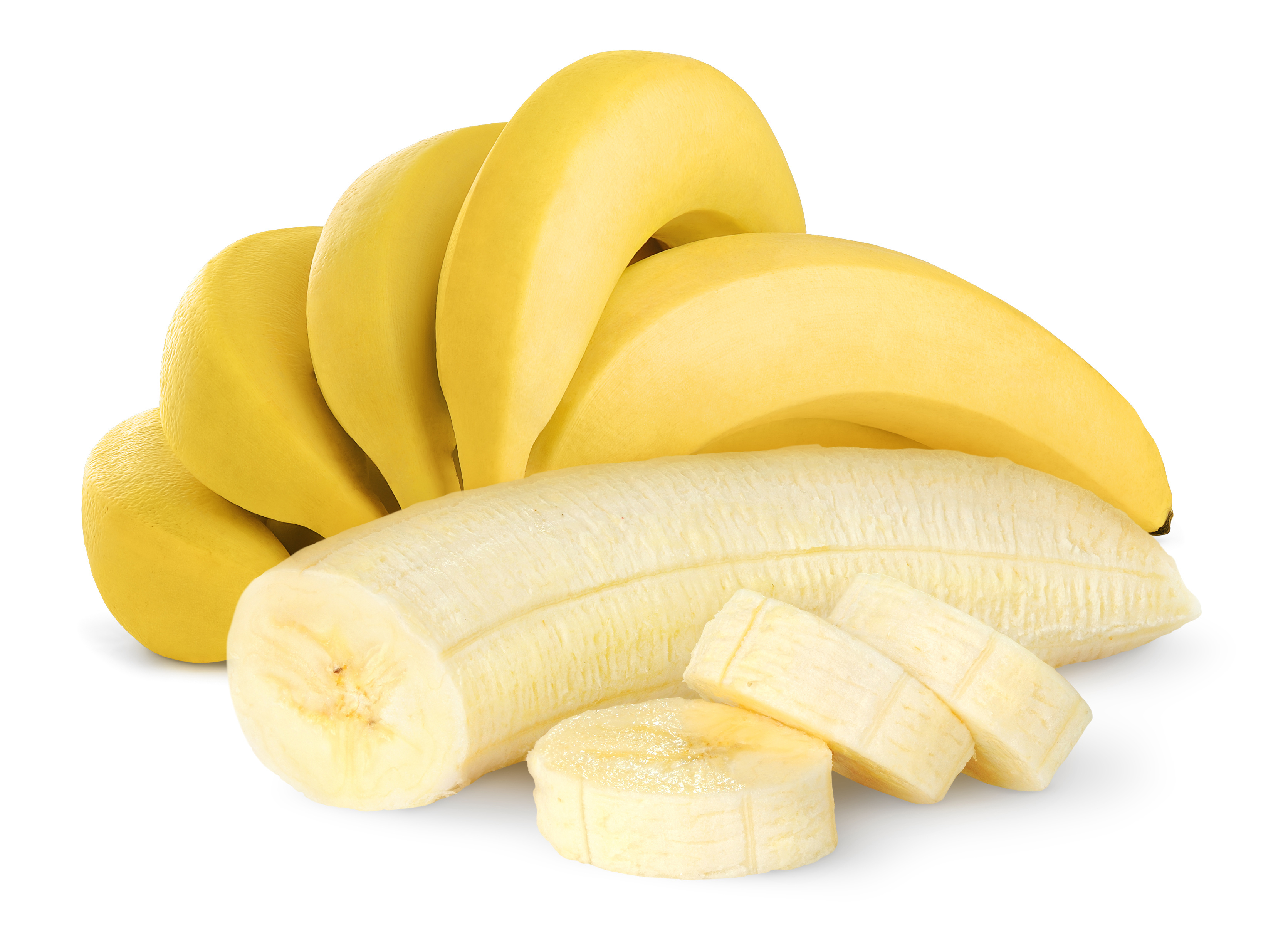
3. Bananas

http://romanlosangelez.files.wordpress.com/2014/01/banana2.jpgHealth benefits: Lowers blood pressure, helps reduce incontincene, relieves menstrual cramps, regulates blood pressure, promotes bone health

Bananas have a lot of health benefits. To illustrate, it prevents the bones from becoming thin and weak. Additionally, according to a study, fresh bananas protect the stomach from developing wounds or even ulcers. That is because bananas promote the production of a thicker mucus that prevents stomach acids. Bananas are also helpful for elimination problems and diarrhoea. By containing a high amount of pectin and fiber, bananas help normalize the movement of the digestive tracts and therefore ease constipation. Consuming three or more fruits per day reduces the risk of age-related vision loss. Especially bananas are fruit that protect your eye sight.


4. Whole grains

http://www.jessainscough.com/wp-content/uploads/2011/05/wholegrains.jpgHealth benefits: Increase concentration, ideal for losing weight

Whole grains like wheat, oats, einkorn or quinoa are ideal for losing weight. When trying to lose weight, products like whole wheat flour, bread or pasta can be really helpful. What's more is that whole grains boost concentration, especially when you have whole grain cereals for breakfast. It helps you to stay focused. Skipping breakfast results in poor concentration and fatigue, so try to have breakfast every day. In addition, whole grains reduce the risk of diabetes.

Quinoa: Quinoa is packed with proteins, magnesium and iron and a grain crop that is easily digestible. What's more is that Quinoa is gluten-free and helps relieve migraines. The NASA considered Quinoa an optimal crop for long-duration space flights.

Oats: Oats is a cholesterol-lowering grain that consist of calcium, magnesium and other essential vitamins. Basically, oats lack gluten. They are, however, grown next to wheat and other grains so that they are contaminated with glutens. So officially, oats is a gluten-containing crop.

Tip: What about starting the day with a healthy and delicious porridge?


5. Yogurt

http://cdn1.scdlifestyle.com/wp-content/uploads/2010/08/how-to-make-yogurt-1.jpgHealth benefits: Helps relieve indigestion, prevents osteoporosis

Yogurt is rich in bacteria and calcium that helps your stomach digest and reduce constipation and diarrhoea. Along with that, yogurt lowers the risk of osteoporosis, which is an illness that weakens bones and increases the risk of unexpected fractures. Combined with vitamin D, yogurt has a positive effect on bone mass. Vitamin D can be found in eggs, oily fish like sardines and salmons or powdered milk. In some yogurts, vitamin D is already added.

Tip: Enjoy your yogurt with fruit as they contain a lot of vitamins and add a pleasing taste.


6. Maca

http://www.organicmeetsgood.com/wp-content/uploads/2013/04/maca-2.jpgHealth benefits: Boosts concentration, prevents sexual dysfunction, promotes fertility

Maca, a root vegetable which looks similar to a radish, helps to balance hormones. Some consider it an aphrodisiac as it might also arouse sexual desire. The root helps women with menstrual problems and prepares them for pregnancy by supplying certain hormones. Moreover, maca serves as an energy and concentration boost.

The plant originally comes from Peru. Some hundred years ago, the Inca consumed maca as a vegetable due to its nutritional values. They boiled, fried, roasted or dried the root and even ate it to prevent lung problems.


http://www.supergreenlandmarket.com/1/wp-content/uploads/2012/12/leafy-greens.jpg 7. Leafy greens

Health benefits: Boosts concentration, prevents cell damage

Leaf vegetables such as broccoli, spinach, lettuce, arugula, asparagus or cabbage are brimming with fiber and vitamin E. They help you to keep mentally focused and prevent your brain cells from damage. Leafy greens are low in calories and fat and high in proteins, magnesium and other vitamins. Especially spinach, which is known to be Popeye the Sailor's favourite vegetable, is rich in iron, calcium and other nutrients. Also cabbage is good for your digestion and heart and is believed to lower the risk of cancer. Generally speaking, leafy greens are very low in calories. One-half cup of cabbage, for instance, contains only 15 calories.

Tip: If you're not really fond of leaf vegetables, try to add them to dishes that you like. You might also want to try out new vegetables like Swiss chard, mustard greens, bok choy, celery, watercress, ...


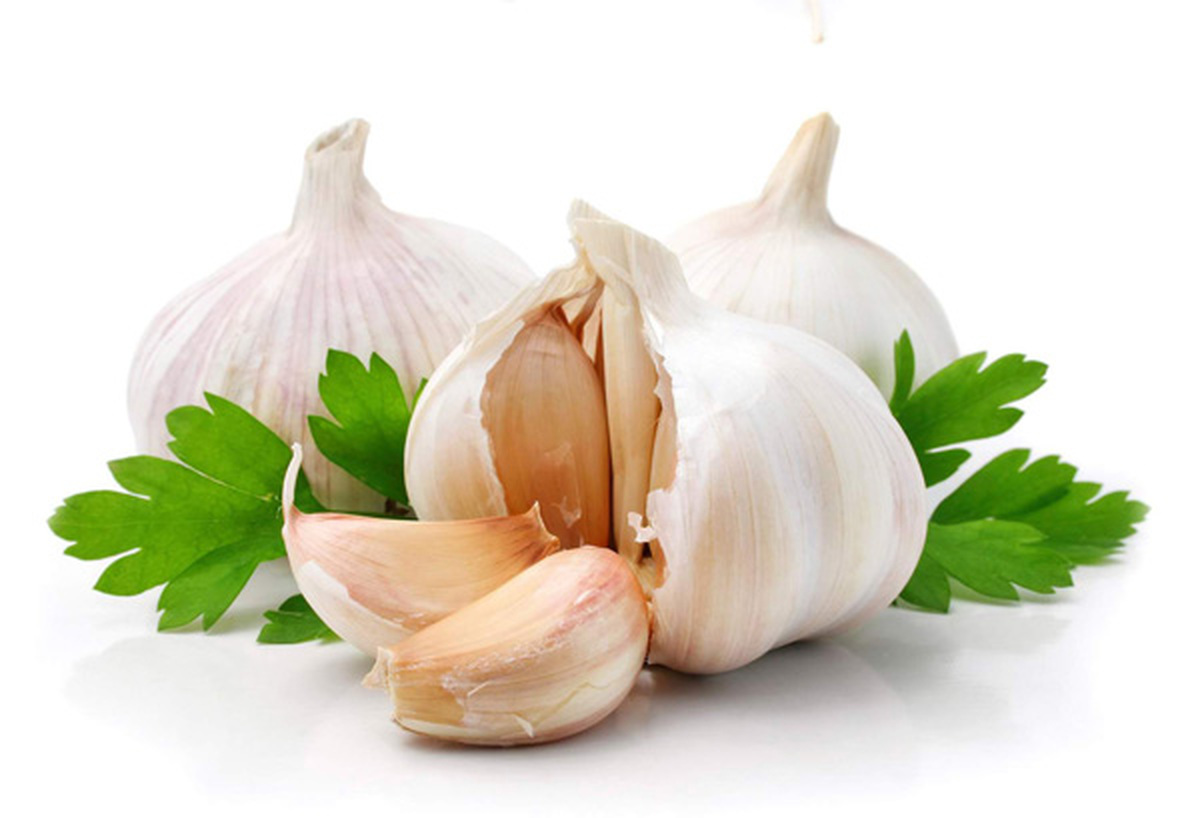
8. Garlic

http://detoxforlife.biz/wp-content/uploads/2014/04/garlic.jpgHealth benefits: Relieves common colds, protects blood cells, prevents sexual dysfunction

Garlic, also known as "the stinking rose" due to its pungent smell, reduces the chance of catching a cold and also helps to recover from a cold. What's more is that garlic boosts your mood and improves sexual performance. Besides, garlic is a great source or vitamin C and able to keep your blood pressure under control. By protecting your blood cells and vessels it prevents you to suffer from inflammatory.

Tip: It's most effective when you eat garlic raw.


9. Fish & Seafood

http://instantpot.com/wp-content/uploads/2009/06/sea-food.jpgHealth benefits: Relieves common cold, relieves migraine, prevents sexual dysfunction

Fish and seafood strengthen your immune system and lessens the frequency of catching a cold. When having a cold or the flu, oily fish like salmon, mackerel and tuna help a lot. Fatty fish like sardines, herrings and trouts, however, reduce the frequency of migraines. Since Inuits have low levels of heart diseases, eating fish regularly might protect the heart and lower the amount of cholesterol. As you might know, fish contain Omega 3 which lowers the chance of inflammations, protects against Alzheimer and recudes the symptoms of ADHD.

Shellfish: By containing a great amount of vitamin B12 and zinc, shellfish reduce the risk of miscarriage.

Oysters: Oysters are rich in zinc and therefore also considered as a aphrodisiac.


10. Nuts

http://www.nutstop.com/media/catalog/product/cache/1/image/9df78eab33525d08d6e5fb8d27136e95/d/e/deluxe-mixed-nuts-roasted-unsalted.jpgHealth benefits: lessens sleep problems, prevent coronary heart diseases

Nuts are loaded with vitamins which reduce the chance of suffering from a coronary heart disease. Most nuts might possibly be able to lower the risk of cancer, but that's not scientifically proven yet.
Walnuts: Especially walnuts improve the quality of sleep. Additionally, the fruit helps the body to protect itself against Parkinson, Alzheimer or type-II diabetes. Some important vitamins in walnuts cannot be found in any other food, which makes this kind of fruit quite special.
Almonds: While being rich in vitamin E, magnesium and calcium, almonds lower cholersterol and the risk of suffering a heart disease.

Tip: It's healthier to eat them raw and with the skin as more than 90% of the vitamins are found in the nuts' skins.

-

image source (1): http://www.deltalabsusa.com/assets/client_files/images/Photos/Food%20and%20Drink/green-tea.jpg
image source (2): http://i247.photobucket.com/albums/gg158/MDA2008/MDA%202011/dark_chocolate.jpg
image source (3): http://romanlosangelez.files.wordpress.com/2014/01/banana2.jpg
image source (4): http://www.jessainscough.com/wp-content/uploads/2011/05/wholegrains.jpg
image source (5): http://cdn1.scdlifestyle.com/wp-content/uploads/2010/08/how-to-make-yogurt-1.jpg
image source (6): http://www.organicmeetsgood.com/wp-content/uploads/2013/04/maca-2.jpg
image source (7): http://www.supergreenlandmarket.com/1/wp-content/uploads/2012/12/leafy-greens.jpg
image source (8): http://detoxforlife.biz/wp-content/uploads/2014/04/garlic.jpg
image source (9: http://instantpot.com/wp-content/uploads/2009/06/sea-food.jpg
image source (10): http://www.nutstop.com/media/catalog/product/cache/1/image/9df78eab33525d08d6e5fb8d27136e95/d/e/deluxe-mixed-nuts-roasted-unsalted.jpg