Showing posts with label red cross. Show all posts

Friday, May 16, 2014

Being a Paramedic For One Day

Hey guys! :-)
Since we're currently covering the topics Health and Medicine, I would like to tell you how a typical 12-hour shift within the Ambulance-Services looks like. As you might have read in some of my preceding blog posts, I work as a voluntary paramedic at the Austrian Red Cross in Linz. I've made the experience that lots of people don't really know what a paramedic does all day long. Most of them assume a paramedic works in a hospital. That's completely wrong! So let yourself plunge into my world of  "being a paramedic (for one day)".

06:30 am - Getting ready for the shift

A typical shift starts at 7 am, which is why you need to check if the ambulance car you'll be driving with is OK. What does that mean? Within an ambulance car, you have a number of various equipment. All this equipment needs to be checked if it's working (e.g. the stretcher [folding bed used to transport the injured]), if it's still usable (e.g. the antiseptic) or how much oxygen you still have aboard (see the portable oxygen cylinders in the second picture). If everything's alright, you tell the dispatchers (the ones who take the calls and then send out the vehicles) by radio that you are available. Have a look at the pictures what we have in our ambulance cars (among lots of other stuff).


07:00 am - Ready to rumble!

Now that the dispatcher knows we're on standby, we might receive a call soon. We don't know what's going to happen next or which kind of patient we're going to get. Maybe it's just an elder woman who is living alone, toppled and can't stand up on her own. Or we assume the worst and we could be sent to a car accident. Anything can happen!

7:44 am - Our fist mission

Beep, beep the radio goes. It's time to save the world.

Yeah, About that phrase... Many people become a paramedic because they believe they are going to save the entire world. Not quite. I don't know about my colleagues, but I have never saved the whole world before. And I suppose I won't do so any time soon. Being a paramedic isn't always about saving someone's life. Instead, we provide first aid in order to relieve the suffering of individuals. Frequently, we pick up our patients at home to bring them to the hospital. For instance: A patient has their leg in a plaster cast and can't go to the hospital on their own. In order to make the doctor's appointment at the hospital happen, we fetch the patient and transport them there. So let's not say we save the world, but rather try to ease someone's pain by giving first aid or giving someone a ride.

Have a look at the picture on the right hand side. This is what our terminal looks like. For those of you who speak German, you'll find that no trouble to understand. There are a few abbreviations, though, which even German speakers might not be familiar with.

So let's have a closer look:
EO stands for Einsatzort, which means the place where something happened (e.g. an accident) and we therefore need to go to in order to help our patients; the Irish Red Cross calls it the incident location.
Dia stands for Diagnose, which means diagnosis. In this particular case we have a patient who suffers from Tachykardie (tachycardia). The prefix tachy- says that something is accelerated whilst cardio/cardia is always linked to the heart. If we have problems with our heart, for example, we would see a cardiologist.
Pat stands for Patient (patient). Our dispatchers always suggest to which hospital our patient should be brought. In this case it says nach AKH. That means we'll bring our patient to the general hospital.
KEO stands for Koordinaten Einsatzort and tells us the exact coordinates of our incident location.
In the very last line we come to know that a GP had a look at the patient already and finds it necessary to bring him to the hospital. (HÄND war vor Ort).

How will we treat our patient?
Our patient suffers from tachycardia, which means that their heart beats really really fast right now. First of all, we will tell our patient to breathe calmly. One of us will feel their wrist to check the pulse. A normal heart beat is about 80 (+/- 20) per minute. Our patient has a pulse of 130(!). We also take their blood pressure, which turns out to be at a normal rate (120/80). The most important thing now is to quickly bring our patient to the hospital. While driving to our destination, the patient should sit up straight as that's easier to breathe. After the patient is brought to the emergency room, we will drive back to our station and hopefully have some coffee there.


10:13 am - The next mission's certain to come.

After having a longer break at the station, the radio beeps again. This time, the beep goes way faster and louder. There are two different radio sounds: the slower one tells us that it's not a matter of life and death, but the faster one does. So we'll finish our coffee quickly and get started.

On our terminal we get to know the following: In the first line the dispatchers tell us that we have to turn our flashing blue light on ("Blaulicht"). The diagnosis says bewusstlos, which means unconscious. In the penultimate line we get to know that a doctor on emergency call is going to be there as well ("NEF 1 ebenfalls").

Since our patient is unconscious, we need to place them in recovery position. I am not going to explain here what the recovery position is about. If you like to read a more detailed explanation how to place someone in recorvery position, have a look at one of my previous blog posts called "How to place someone in Recovery Position". What's more is that we will administer oxygen to our patient in order to make their breathing easier. We'll also cover our patient with a blanket made of aluminum. We don't want them to feel cold, do we?
Generally speaking, since a doctor was sent to the incident location too, he's the one to call the shots. We'll place the patient on the stretcher, of course still being in recovery position, and set off. After dropping the patient off at the emergency room, we drive back to our station and have a break.


12:30 pm - Enjoy your meal!

I'm starving! When volunteers work the day shift, they get coupons to get free lunch at one of the hospitals in Linz. Most of the time, we receive coupons from the "Landes- Frauen- und Kinderklinik" - a hospital that emphasizes on toddlers, children and expectant mothers.

This is how a typical lunch in a hospital looks like. What do you think about it? Does it look delicious to you? Would you call it "gourgeous" as Jamie Oliver always does?


04:47 pm - Last but not least.

What we have here is something that we experience in almost every (night) shift: alcohol abuse. No, we're not the ones , but our patient. Sadly, like in every bigger city, there are people living in a poorhouse or even on the street. Actually, we don't transport these kind of patients to the hospital because they have a problem with alcohol. Instead, we bring them there because when they are drunk, they do silly things like sleeping outside or trip and fall. We neither want them to feel cold, nor do we want them to bleed or feel pain. 

It can be a bit nerve-wracking to pick up a drunk guy who talks a lot of nonsense or might even be aggressive. In case a patient is aggressive, I call the cops so that they escort us to the hospital. It's a lot more secure for us paramedics to have a police officer on our side.

What will we do with this patient?

Well, the most important thing is to, again, bring the patient to the hospital. Before that we'll feel their wrist to check the pulse and take a blood sample so as to measure their blood sugar. If the person had been sleeping outside, we make sure to cover them with a blanket. Otherwise the patient might suffer from hypothermia. What does that mean? Hypo always refers to something that is below a normal frequence or value. In contrast, hyper means that something is above a certain value. "Thermia" refers to temperature, which means that hypothermia is when your body temperature gets low so that it even might endanger yourself.


06:45 pm - Exhausted, but satisfied.

Our shift is drawing to an end. For twelve hours we've been available for people in need. We didn't exactly save the world. Instead, we tried to ease people's pain and bring them to the hospital. That's actually a lot. Even when we're quite exhausted right now, we can be proud of ourselves!

If you have any questions on that, please don't hesitate to text me! :-)


image source (1): http://www.roteskreuz.at/typo3temp/imagegallery/450_450_16329_T5%20-%20Seiteneinstieg.JPG
image source (2): http://www.roteskreuz.at/typo3temp/imagegallery/450_450_30703_P4120113.JPG 
image source (3): http://www.roteskreuz.at/typo3temp/imagegallery/450_450_16328_T5%20-%20Verbandkoffer.JPG
iamge source (4): http://www.roteskreuz.at/typo3temp/imagegallery/450_450_16331_T5%20-%20Heck%20offen.JPG
image source (5): (c) Manuel PIRKLBAUER
image source (6): (c) Manuel PIRKLBAUER
image source (7): (c): Werner SCHIER
image source (8): (c): Manuel PIRKLBAUER

Thursday, April 3, 2014

How to Place Someone in Recovery Position

Hey guys,

File:Recovery position.svg
Are you making good progress with studying for PC1? I'm getting on well, but I'm definitely out of practice when it comes to giving advice and instructions. In order to do well on this part of PC1, I am now going to give you instructions how to place someone in recovery position. In case you're not familiar with that phrase at all, maybe the image on the right hand side will be a help. Doens't ring a bell? Maybe you'll remember while reading through the instructions.

image source: http://upload.wikimedia.org/wikipedia/commons/thumb/3/31/Recovery_position.svg/800px-Recovery_position.svg.png

--

Introduction

The recovery position is a basic first aid treatment that you've certainly come across in a first aid course. You might remember the recovery position as an easy practice. There are a couple of niceties though that I'd like to make you aware of.

Indication

A person that is unconscious must be placed in recovery position in order to avoid the person from suffocating. When someone becomes unconscious, their muscles are no longer able to let the person swallow. As a result, the person would swallow their own vomit in case he or she throws up. Additionally, someone can suffocate from the tongue falling back into the airway. Surely we don't want that to happen, which is why we place the person in recovery position.

First approach

The best thing to find out if a person is unconscious is to address the person by asking if everything is alright. In case the person doesn't answer, you can assume that he or she is either asleep, unconscious or, in the worst case, not breathing at all. In former times people used to lightly hurt someone by pinching their hand. Please note that this practice is no longer in use. Instead, it would be a good idea to grab the person's shoulder and simply shake it once or twice. If they are still not responding, call 144 (or 9-1-1 in the U.S.) or tell someone else to do so. Subsequently, knee down next to the person in case you haven't done that already. Before checking if the person's still breathing, you need to use a certain technique that is called the head-tilt chin-lift maneuver. The clue is in the name. To make use of this maneuver, place one hand on the person's forehead and your fingers of the other hand on the chin. Push the forehead down and lift up the chin. By doing so, you ensure that the patient's airway are not obstructed by their tongue falling back. Please remember that the head-tilt chin-lift maneuver can unly be used if you are a 100% sure that the patient does not have any neck injuries.
Come closer to the person's head in order to hear whether they are breathing or not. At the same time, look towards the person's stomach so as to make out any breathing movement. It would be adivsable to do that at least for 10 seconds. If there is no breathing at all, start with a CPR immediately. In case the person is still breathing, place him or her in recovery position.

The recovery position

Unless the patient has an obvious neck injury, he or she MUST be placed in recovery position. To do so, be sure the patient lies on the back. Place one arm 90° away from the body. Then, grasp the patient's second arm as well as the leg of the same half of the body. By holding arm and leg, gently turn the person onto the side where the other arm lies. If I were you I'd ask someone to grasp the patient's head and turn it to the same side and at the same pace you turn the patient's body. Make sure the leg you just moved is bent. We don't want the patient to roll onto the stomach, do we? Not only should you bend the leg, the arm you just turned to the side should be bent as well. Following that, use the head-tilt chin-lift maneuver one more time with the aim of letting the patient inhale and exhale properly. Additionally, you can place the hand that's lying on top under the patient's cheek. Consequently, the patient will be in an absolute stable position.

The best thing to do while waiting for the ambulance is to stay close to the patient. You might want to check the breathing every three or four minutes. In rare cases the patient's condition may deteriorate, which is why checking whether the patient's still breathing is a must. Generally speaking: Take care not to become anxious or even panicky. There's nothing that could go amiss, so try to stay calm and think clearly.

--

Any questions on that? Feel free to add a comment or ask me in person.

Saturday, March 22, 2014

May I introduce Walter Elias Disney?


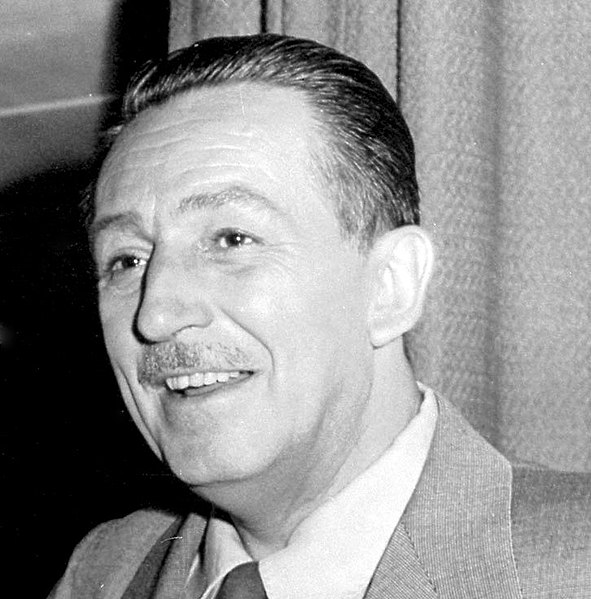
File:Walt disney portrait.jpgWalter "Walt" Elias Disney is one of the founders of the world-famous Walt Disney Company. It all started in 1901, when Walt was born in a city called Chicago, Illinois.

At this point, let's have a closer look at the state Illinois, so we can trace back Walt's roots more easily.
Illinois is located in the Midwest Region of the United States. While Chicago is Illinois' largest community, Springfield is home to the Illinois State Capitol, which makes it Illinois' capital city.

http://www.map-of-usa.co.uk/images/illinois.gifAs you can see on the map, Illinois borders Iowa, Wisconsin, Lake Michigan (which belongs to Michigan), Indiana, Kentucky and Missouri. The latter was a very significant place in Disney's life. When he and his family relocated to Marceline, Missouri, Disney found out he was a passionate and talented draftsman. Walt carried four years on his back when he realized he would become a cartoonist one day!

In 1917, Walt moved back to Chicago. After being rejected by the army, Walt joined the American Red Cross where he was sent to France to conduct an ambulance car. For me as a  voluntary paramedic this was really interesting to read!

First steps

Disney and his friend Ubbe Iwerks formed a company named "Iwerks-Disney Commercial Artists" in 1920. The company soon ceased to exist, whereupon Walt joined the Kansas City Film Ad Company in Missouri. Eventually, Walt launched his own business. With his very first employee, Fred Harman, Walt wrapped up a deal with Frank L. Newman (I'm not kidding!) who was the owner of the local theater in Kansas City. There, Walt and Frank presented their cartoons ("Laugh-O-Grams") for the very first time.
In 1923, Disney signed a contract with M. J. Winkler to produce a series of Alice Comedies. This year is considered as the beginning of "The Disney Brothers Studio". Unfortunately, their costs exceeded their returns, which is why they soon declared bankruptcy. Roy O. Disney, Walt's brother, invited him to come to Hollywood, CA. Once again, Walt launched the Disney Brothers Studio together with his brother Roy.

Does anyone of you remember this cartoon on the right hand side? Do you know how this "sort of Mickey Mouse" was called back then? Well, here's the answer: Published in 1928, this cartoon was the very first Mickey Mouse cartoon created by Walter Elias Disney. He was called the "Steamboat Willie". Doesn't ring a bell?
Some of you might have heard that the story of Disney started with a lucky rabbit. This is absolutely true: Before Walt made some early drafts on the Mickey Mouse, he drew a rabbit called "Oswald, the Lucky Rabbit".


Walt Disney's Masterpieces

Over the years, numerous things happened: Walt Disney's first full-color cartoons are introduced, Donald Duck appears, the Disney Studio relocates to Burbank, California and the first Disney park ("Disneyland") is opened in Anaheim, CA. What's more is the release of several films which are nowadays considerer as The Walt Disney Masterpieces. For example:

1937: Snow White and the Seven Dwarfs is the very first animated film in Walt Disney's history
1940: Fantasia, one of today's classics
1950: Treasure Island, Disney's first live-action movie is released
And so on and so forth... 

What is your favorite disney movie? Which ones did you watch when you were a kid? Tarzan? The Lion King? 101 Dalmations? Beauty and the Beast? I watched so many Disney films in my childhood, I could never list all of them. Today, I watch a Disney movie every once in a while. Aren't they just amazing? I admire all the cartoonists and graphic designers who put so much work into this. Lately I found some early drafts of several Disney cartoons. I am going to show you two of them, but if you would like to see more, click here.


Do you recognize these two films?


Walter's private life

Walt got married to Lillian Marie Bounds at the age of 24. He had met her while Lillian worked as a secretary at the Disney Studio. His wife gave birth to a daughter in 1933, Diane Marie Disney, although Walt had always dreamed about having a son. The couple adopted a second daughter, Sharon Mae Disney, who was born in 1936.
By the way: It was not Walter who named his most famous cartoon character "Mickey Mouse". At first, Walter wanted to give him the name "Mortimer Mouse", whereupon Lillian told Walt it sounded "too pompous". His wife then suggested the name "Mickey Mouse".

His whole life, Walter had been chain smoking. In 1966, he was diagnosed with lung cancer and soon afterwards died because of it. After his death, Lillian Disney gave a $50 million to the Walt Disney Company so as to construct a new concert hall. Six years after Lillians death, the Walt Disney Concert Hall opened in Los Angeles, CA.


Some facts you surely didn't know about Disney


    Disney Characters That Are Hidden In Other Disney Films
  • Opinion polls show that Mickey Mouse wasn't the most famous cartoon, but Popeye the Sailor.
  • Mickey Mouse was the first animated cartoon to talk. His first words were "Hot dog"!
  • In some Disney movies, classic characters are hidden somewhere in the background. E.g. in the opening scenes of The Little Mermaid you can make out Goofy, Mickey and Donald. See for yourself in the picture on the right. If you want to see more scenes where other Disney characters are hidden, follow this link.
  • Donald Duck's voice, Clarence Nash, created the dog barks for 101 Dalmations.
  • Walt Disney's personal favorite character was Goofy.
  • Bahlu (Baloo) is Hindi and means "bear".
  • Lots of Disney films such as The Jungle Book or Pinnochio do not have a mother-character. Some say that's because of the early death of Disney's mother.  
  • They used tiger roars for the Lion King as lions weren't loud enough.
  • Simba is Swahili and means "lion".
  • Originally, they wanted to name the film Lion King "King of the Jungle" until someone noticed that lions actually don't live in the jungle.
  • Wall-E, the rubbish-compactor, was named after Walter Elias Disney.
  • Sulley from Monsters Inc has more than 2.3 million individual hairs. It took the producers twelve hours to produce one single frame of Sulley.
  • Cinderella's Castle was designed after Neuschwanstein Castle, Bavaria, Germany.
  • The correct plural form of "dwarf" is "dwarfes". The title "Snow White and the Seven Dwarfs" still says "dwarfs" because back then, "dwarfs" was grammatically right.
  • There is a club called Club 33  within Disneyland. Opened in 1967, the club has a list of 487 members who are allowed to enter. Good luck with trying to get onto the list; the waiting list is of around 14 years.
  • The Disney World resort is about the same size as San Francisco.
  • Steve Jobs was a member of the board of Disney's directors. If you ever watched the film Cars, you might have seen a white racing car with the Apple logo and the number "84" on it (the first Macintosh computer was released in 1984). See for yourself on the picture below.


http://bdd.worldofcars-forum.fr/bddcars/images/personnages/apple_car.png


You're dead if you aim only for kids. Adults are only kids grown up, anyway.

- Walt Disney


sources: thewaltdisneycompany.com, disney.wikia.com/wiki/, wikipedia.org, www.empireonline.com
image source (1): http://commons.wikimedia.org/wiki/File:Walt_disney_portrait.jpg
image source (2): http://www.map-of-usa.co.uk/images/illinois.gif
image source (3): http://thewaltdisneycompany.com/sites/default/files/styles/775x/public/timeline-image/1928_11_18_3%20%282%29.jpg
image source (4): http://s3-ec.buzzfed.com/static/enhanced/terminal05/2012/10/6/19/enhanced-buzz-32109-1349567318-4.jpg
image source (5): http://s3-ec.buzzfed.com/static/enhanced/web03/2012/10/6/18/enhanced-buzz-9106-1349562614-0.jpg
image source (6): http://izismile.com/2013/06/10/disney_characters_that_are_hidden_in_other_disney_27_pics.html
image source (7): http://bdd.worldofcars-forum.fr/bddcars/images/personnages/apple_car.png

Thursday, January 9, 2014

Comparison of two Red Cross Societies: Austria and America

As some of you might have read in this blog article, I am a paramedic at the Austrian Red Cross. Since I have read and heard a lot lately about American culture, people and geography, I became curious about the American Red Cross Society. So I asked myself the question: What does the American Red Cross do compared to the Austrian Society?

What they have in common:

    1. Blood Donation: Both the American and the Austrian Red Cross Society provides a Blood Donating Program.
    2. Training Services: The Austrian Red Cross provides First Aid courses as well as Babysitting courses. The American Society, however, goes even further: they offer Family Caregiving, Child Care, Pet First Aid, Water Safety Education, Swimming Lessons and many many more.
    3. Disaster Relief: Both National Societies provide food, shelter and health care in case of a natural or man-made disaster. Even beyond their state borders they're helping out. The Austrian Red Cross, for example, provided victims of the Tsunami "Ketsana" in the Philippines in November 2013 with food and water - see pictures here.

      What the American Red Cross does additionally:

        http://newsroom.unl.edu/announce/files/file4567.jpg
      1. Supporting America's Military Families: Military members and their families are supported by the American Red Cross. They help them to prepare for their military service or take care of wounded persons.
         image source: http://newsroom.unl.edu/announce/files/file4567.jpg

        http://www.climatecentre.org/images/images_training/austrianredcross.jpg

        What the Austrian Red Cross does additionally:

        1. Ambulance Services: When somebody calls the ambulance because they're hurt, a Red Cross ambulance car will soon arrive to help out and bring the patient to the hospital.
        2. Health & Community: Numerous people are not able to carry out everyday actions anymore (e.g. to prepare breakfast). The Red Cross sends some kind of "nurses" to the person's home.
        3. Tracing Services: The Red Cross supports people who lost someone during a war, a natural disaster or because of migration.
        4. Development Cooperation: After a war, the Red Cross doesn't only want to give the victims first aid, but provide them with water (drinking-water purification) and all the other goods so as to make the victims independent again (so that they're not depending on another country or organization).
        5. Youth Red Cross: Kids should be aware of dangers as early as possible. For this reason, the Red Cross teaches First Aid to kindergarten kids and primary school kids.

        image source: http://www.climatecentre.org/images/images_training/austrianredcross.jpg


        What I found interesting...


        ...is the motto or slogan of the two societies:

        American Red Cross: Together, we can save a life

        Austrian Red Cross: Out of Love (german: Aus Liebe zum Menschen)


        ...is the number of full-time employees:

        American Red Cross: 35,000

        Austrian Red Cross: 7,200


        ...is the number of volunteers:

        American Red Cross: 1,000,000

        Austrian Red Cross: 59,000


        Here's a nice advertisement of the American RC. Check it out!


        For further information, have a look at the website of the American Red Cross Society here (that's where I got the information from).

        Monday, December 2, 2013

        Out of Love

        Howdy again!

        I have been thinking a lot lately what I could write about in my blog. Finally, I decided to tell you something about what I do within the Austrian Red Cross.

        More than five years ago, I started as a Youth Red Cross member at my former school to organize small events in order to collect donations. After some time, I attended a national Youth Red Cross camp to learn more about how to organize projects and the Red Cross itself. Today, I am a supervisor at this camp, which means that I am training youngsters to become an as good organizer as I was back then.

        The Austrian Youth Red Cross also organizes the International Friendship camp which takes place in Langenlois (located in Lower Austria) every year. More than 50 Red Cross/Red Crescent members, coming from all over the world, gather for two weeks in Langenlois to exchange their experiences and learn something about the other participant's cultures. Since three years, I am a supervisor at this camp as well.

        Although I am still working voluntarily as a supervisor at these two camps, I have become a little too old for the "Youth" Red Cross. That's why I started the training program in October 2012 to become a paramedic. Recently, I finished all the courses and passed the final exams. Now I can proudly announce that I am a paramedic of the ambulance service of the (Upper) Austrian Red Cross.

        Back in Linz, where I live, I do (night) shifts regularly. After a shift, I am always exhausted and tired, but I am glad that people placed their trust in me and that I was able to help them.

        Loads of people keep asking me why I am working as a paramedic voluntarily. Here is a very nice TV spot "Out of Love", done by the Austrian Red Cross. It basically tells one very good reason for being a volunteer of the Red Cross Society.