Thursday, June 5, 2014

Apple - A History of Advertising

When someone mentions the words "Apple" and "foundation", one might immediately think of Steve Jobs. However, Steve Jobs didn't launch this company all on his own. Together with Steve Wozniak and Ronald Wayne, Jobs established Apple Inc. on April Fool's Day in 1976. They named the company Apple because Jobs was just coming back from working on an apple farm and he thought the name was "fun, spirited and not intimidating".

The Evolution of Apple's Logo

Unlike other companies like Coca Cola, Apple Inc. has had only three logos since the company's foundation.
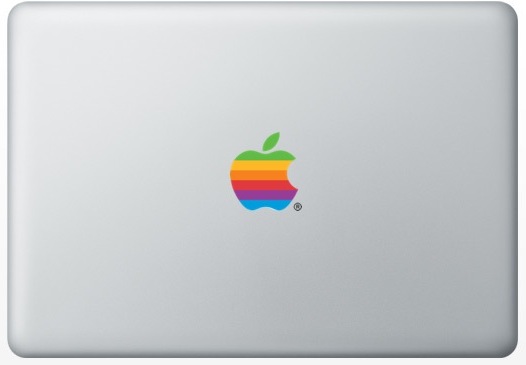
The first logo was designed in 1976 by co-founder Ronald Wayne and shows Sir Isaac Newton sitting under an apple tree and an apple hanging down a branch. On the outside border of the logo, there is a phrase saying: "Newton... A Mind Forever Voyaging Through Strange Seas of Thought ...Alone". Since the first logo was poorly recognizable, it was replaced by the second logo only a few months later. Designed by Rob Janoff, who became quite famous for designing the "rainbow Apple", the logo shows a colorful apple with a bite taken out of it. Steve Jobs and his designer Rob Janoff didn't want people to confuse the apple with a cherry or a tomato, which is why they added the bite to the apple. Additionally, Job suggested to put the green color on top to make it look more like an apple. The third logo was introduced in 1998 as some said the colorfully striped apple would look ridiculous on the new iMac. Jobs wanted to keep the Apple, so they simply changed the color to grey.

Apple Logo Evolution Old Logos

If Jobs & Co. hadn't decided on changing the color to grey in 1998, the MacBook would probably look like this today. I guess Apple made the right choice.


Apple's History of Advertising


Retrospective and Evolution of Apple AdsApple I

Back in 1976, when Apple was just getting off the starting blocks, its founders introduced the Apple I, a personal computer, and sold it for $666.66. When you have a look at the advertising on the left hand side, you can see that there is a lot of text, one low-quality picture and Apple's first logo. What do you think about this advertising? Does it look appealing to you? Well, to me, it doesn't look attractive at all. You can't even make out what's on the picture on the top right corner. At least I can't. For me, there is way too much text on this ad. Imagine this advertisement as a poster next to a sidewalk. Would you stop walking in order to read it? Would you be able to tell at a glance what this ad is about?


Retrospective and Evolution of Apple AdsApple II

Only one year after Apple's foundation, Wozniak invented another computer called Apple II. Although it had the same processor in and run at the same speed like Apple I, the Apple II was way more popular than the first one.
The advertisement on the right hand side looks a lot more concise, don't you think? There is very little text and just one photo of a specific fruit. Guess what, it's an apple! Still, I believe that the apple is photoshopped. Just look at its colors! It looks like the apple from Snow White. That's at least what I think.


http://cdn.theatlantic.com/newsroom/img/posts/Apple-II-III-ads.jpgApple III

Although Apple II was quite a success, they decided to invent a new model with an even better system. The Apple III was proudly introduced in 1980, but it soon became apparent that the system wasn't as good as expected. Jobs didn't want the computer to have a cooling fan since it was "too noisy and inelegant". Therefore the motherboard of the computer got really hot after a while which resulted in system malfunctions. In addition to that, there were some other softwares that didn't work properly. So Apple replaced these "bad" Apple IIIs and introduced another version of Appe III, which, unfortunately, still had some problems.

What do you think about the advertisements? There was a series of these posters and each of them was dedicated to an American entrepreneur. Even though the ad contains a lot of text, I really like the idea of referring to notable inventors like Edison or Ford. When reading the heading, one might think: Ok, so what makes Apple so exceptional to even compare themselves with Edison or Ford?
 

Apple Lisa

The Apple Lisa is not only named after a girl (Steve Jobs' daughter's name was Lisa), but also stood for "Local Integrated Software Architecture". What made Apple Lisa so special? It was the very first Apple computer to have Graphical User Interface (GUI). That means that you were able to point and click with a rolling device called "mouse". Before that, the computers were text-based, which means that one had to type in commands in order to make the system respond.
Have a look at the video-ad below. I don't know about you, but I think this video is creepy! Just see for yourself.


Retrospective and Evolution of Apple AdsMacintosh

Introduced in 1984, Macintosh was a line of personal computers developed by Steve Jobs. Like the Apple Lisa, Macintosh had GUI and a mouse.
Have a look at the advertisement. On the bottom left corner, there is a picture of someone using a mouse. The text in the pic says "If you can point, you can use Macintosh." Also, on the bottom right corner, where you can see the colorfully striped Apple logo, it says "Soon there'll just be two kinds of people. Those who use computers and those who use Apples." Well, this is quite a self-assured statement, don't you think?


https://blogger.googleusercontent.com/img/b/R29vZ2xl/AVvXsEgvBw6zNAMTDPkFhumJfHhHwmHNK0lGPFKyVey9Iyh2oSyJr4-9AeYdK3KWsnixXxQyowce5NlB10sJxEU9I4-VG7Df_ClWhEzyqb_XKLaHTvLg_UjYxKnQeKNwzJrXPSErLweAPu0YMiw/s1600/Think_Different_Apple-1998-771623.jpg"Think Different"

The advertising campaign "Think Different" was introduced in 1997 and mainly used for TV commercials and print ads.

The commercial as well as the ad show several personalities of the 20th century who, according to Jobs, "thought different" and "changed things": Albert Einstein, Martin Luther King, Jr., Thomas Edison, Mahatma Gandhi or Pablo Picasso. Have you ever seen this ad before? What do you think about it?


"Get a Mac"

Another campaign created by Apple's advertising agency was "Get a Mac". The TV campaign, which ran from 2006 to 2009, tells the story of a PC and a Mac being compared to each other. One guy dressed in casual clothes and personifies a Mac and the other one is dressed more formally and represents the (Windows) PC. The commercial was broadcasted in almost every English speaking country as well as in Japan. It was even dubbed into Spanish, German and Italian.
The actual ad lasts about an hour or so, so it gets a bit boring after a while. However, here's a shorter version that shows the ten most humorous statements. If you haven't seen it before, you should definitely watch it. It's hilarious.


Sources:
http://www.adweek.com/adfreak/story-behind-apple-logos-evolution-11672
http://webexpedition18.com/articles/evolution-apple-ads/
http://en.wikipedia.org/wiki/History_of_Apple_Inc.#Apple_IPO 
http://oldcomputers.net/ 
http://en.wikipedia.org/wiki/Get_a_Mac

Image Sources:
(1) http://famouslogos.net/images/apple-logo-evolution.jpg
(2) http://edibleapple.com/wp-content/uploads/2009/04/maacbookcolor.jpg 
(3) http://webexpedition18.com/wp-content/uploads/2011/10/1976apple01.jpg
(4) http://webexpedition18.com/wp-content/uploads/2011/10/1977apple05.jpg
(5) http://cdn.theatlantic.com/newsroom/img/posts/Apple-II-III-ads.jpg
(6) http://webexpedition18.com/wp-content/uploads/2011/10/1984apple34.jpg
(7) https://blogger.googleusercontent.com/img/b/R29vZ2xl/AVvXsEgvBw6zNAMTDPkFhumJfHhHwmHNK0lGPFKyVey9Iyh2oSyJr4-9AeYdK3KWsnixXxQyowce5NlB10sJxEU9I4-VG7Df_ClWhEzyqb_XKLaHTvLg_UjYxKnQeKNwzJrXPSErLweAPu0YMiw/s1600/Think_Different_Apple-1998-771623.jpg

Sunday, June 1, 2014

Capitalization 101 - Part One

Since the writing parts of the Progress Checks have always been the ones I had to struggle most with, I am currently reading a lot about Punctuation and Style. Today, however, I'd like to talk about Capitalization and its abundant rules about beginning a sentence. I hope the following information and tips are helpful to you.

Beginnings

  1. Surprise, surprise: The first word of a sentence is capitalized.
    Example: Blogging is a great opportunity to practice writing.

  2. If a sentence is placed in parentheses, the first word of the sentence is capitalized.
    Example: Blogging is a great opportunity to practice writing. (There are a lot of other possibilities, of course.)

  3. If a sentence inside another sentence is in parentheses, the (inner) sentence is not capitalized.
    Example: Blogging is (among lots of other possibilities) a great opportunity to practice writing.

  4. The first word of a quotation is capitalized.
    Example: "Blogging is a great opportunity to practice writing," my teacher says.

  5. If a quotation is interrupted in the middle, the second part of the quotation is not capitalized.
    Example: "Blogging is a great opportunity to practice writing," my teacher says, "but there are loads of other possibilities."

  6. If a quotation is dependent on the sentence in which it appears, the quotation is not capitalized.
    Example: Blogging is "a great opportunity to practice writing."
    Or: My teacher said that "blogging is a great opportunity to practice writing."

  7. If a motto, rule or direct question, whether a quotation or not, appears in another sentence, it is capitalized.
    Example: The question is, How many blog posts do we need to have by the end of the semester?
    Or: You know the saying "Practice makes the master."

  8. The first word following a colon is usually lowercased when it begins a list or even a complete sentence. When the sentence, however, is longer and seperate from the preceding one, the first word is capitalized.
    Example: A good language learner practices these four language skills: reading, writing, listening and speaking.
    Or: A good language learner has the following characteristics: he is open-minded, communicative and eager to learn.
    But: One more thing: A good language learner must neither be idle nor biased, but curious about different countries and cultures.

  9. The first word in an outline heading begins with a capital.
    Example:
    1. Introduction
    2. Body Paragraph
      1. Thesis I
      2. Thesis II
      3. Thesis III
    3. Conclusion

  10. The first word and some particular words of a salutation of a letter are capitalized. As far as the complimentary close is concerned, the very first word begins with a capital.
    Example: Dear Sir or Madam; Ladies and Gentlemen
    Or: Sincerely yours; Truly yours
Source: Merriam-Webster's Guide to Punctuation and Style, Second Edition

Friday, May 23, 2014

May I introduce Tim Berners-Lee?

Since I devoted a lot of time and effort to my Culture Paper which is about "Great American Entrepreneurs", I decided to introduce to you another great entrepreneur in this blog post. But I don't want you to be bored to hear about Americans all the time, so I am now going to write about a British entrepreneur.

Born and raised in London, Tim Berners-Lee studied physics at the University of Oxford for about three years, but in the end became a computer scientist. Tim is best known for being the inventor of the World Wide Web.
Berners-Lee had been working as a software engineer at CERN in Geneva, Switzerland, for several years. In 1989 he came up with the idea of the WWW. Coming from all possible continents, the people working at CERN were gathering in Geneva in order to work on their projects. After returning to their home countries, they wanted to keep in touch and exchange data. Doing so over the telephone or via air mail was both pricey and laboriously. Tim unterstood their problem and thought of an idea how to connect the computers they were working with, even when being a thousand miles away from each other. Thereupon Tim Berners-Lee invented three technologies which are today the basis of the World Wide Web:
  1. HTTP (Hyper Text Transfer Protocol) is a protocol that defines how information is transmitted and tells, so to say, the web browsers and servers what to do. The acronym "http" or "https" is placed in front of every Internet address (URL).
  2. HTML (Hypertext Markup Language) is a language used for creating web pages. The language consists of certain elements which are "read" by the web browser (Google Chrome, Mozilla Firefox, Internet Explorer, Safari, etc.).
  3. URI (Uniform Resource Identifier) identifies the name and location of a resource (e.g. a file or a Internet address). A URI would look like this: /images/bernerslee.jpg, whilst a URL, which is similar to the URI, would look like this: http://www.blogger.com/images/bernerslee.jpg.

Based on these three technologies, Tim Berners-Lee created the World Wide Web. The world's very first website, info.cern.ch, was launched in 1991 and outlined the concept of the WWW. If you like to read more about the invention of the World Wide Web, feel free to visit this website. Or you could watch this TED video of Tim Berners-Lee talking about his invention. It's about 16 minutes, but it's definitely worth watching.


Today, Berners-Lee is a professor in the Electronics and Computer Science Department at the University of Southampton (UK). Also, he founded and is currently leading the World Wide Web Consortium (W3C), an organization working on the development of the WWW. Although Berners-Lee invented today's most dominant communication medium, he is not considered one of the wealthiest persons in the world.

Sources
http://www.bbc.co.uk/history/historic_figures/berners_lee_tim.shtml
http://webfoundation.org/about/sir-tim-berners-lee/
http://www.webopedia.com/TERM/H/HTTP.html
http://www.techterms.com/definition/uri
http://www.ted.com/speakers/tim_berners_lee

Image Sources
http://3ehspg3e85cn1oz25ebdof7cd3.wpengine.netdna-cdn.com/wp-content/uploads/2012/06/timbernerslee.jpeg

Friday, May 16, 2014

Being a Paramedic For One Day

Hey guys! :-)
Since we're currently covering the topics Health and Medicine, I would like to tell you how a typical 12-hour shift within the Ambulance-Services looks like. As you might have read in some of my preceding blog posts, I work as a voluntary paramedic at the Austrian Red Cross in Linz. I've made the experience that lots of people don't really know what a paramedic does all day long. Most of them assume a paramedic works in a hospital. That's completely wrong! So let yourself plunge into my world of  "being a paramedic (for one day)".

06:30 am - Getting ready for the shift

A typical shift starts at 7 am, which is why you need to check if the ambulance car you'll be driving with is OK. What does that mean? Within an ambulance car, you have a number of various equipment. All this equipment needs to be checked if it's working (e.g. the stretcher [folding bed used to transport the injured]), if it's still usable (e.g. the antiseptic) or how much oxygen you still have aboard (see the portable oxygen cylinders in the second picture). If everything's alright, you tell the dispatchers (the ones who take the calls and then send out the vehicles) by radio that you are available. Have a look at the pictures what we have in our ambulance cars (among lots of other stuff).


07:00 am - Ready to rumble!

Now that the dispatcher knows we're on standby, we might receive a call soon. We don't know what's going to happen next or which kind of patient we're going to get. Maybe it's just an elder woman who is living alone, toppled and can't stand up on her own. Or we assume the worst and we could be sent to a car accident. Anything can happen!

7:44 am - Our fist mission

Beep, beep the radio goes. It's time to save the world.

Yeah, About that phrase... Many people become a paramedic because they believe they are going to save the entire world. Not quite. I don't know about my colleagues, but I have never saved the whole world before. And I suppose I won't do so any time soon. Being a paramedic isn't always about saving someone's life. Instead, we provide first aid in order to relieve the suffering of individuals. Frequently, we pick up our patients at home to bring them to the hospital. For instance: A patient has their leg in a plaster cast and can't go to the hospital on their own. In order to make the doctor's appointment at the hospital happen, we fetch the patient and transport them there. So let's not say we save the world, but rather try to ease someone's pain by giving first aid or giving someone a ride.

Have a look at the picture on the right hand side. This is what our terminal looks like. For those of you who speak German, you'll find that no trouble to understand. There are a few abbreviations, though, which even German speakers might not be familiar with.

So let's have a closer look:
EO stands for Einsatzort, which means the place where something happened (e.g. an accident) and we therefore need to go to in order to help our patients; the Irish Red Cross calls it the incident location.
Dia stands for Diagnose, which means diagnosis. In this particular case we have a patient who suffers from Tachykardie (tachycardia). The prefix tachy- says that something is accelerated whilst cardio/cardia is always linked to the heart. If we have problems with our heart, for example, we would see a cardiologist.
Pat stands for Patient (patient). Our dispatchers always suggest to which hospital our patient should be brought. In this case it says nach AKH. That means we'll bring our patient to the general hospital.
KEO stands for Koordinaten Einsatzort and tells us the exact coordinates of our incident location.
In the very last line we come to know that a GP had a look at the patient already and finds it necessary to bring him to the hospital. (HÄND war vor Ort).

How will we treat our patient?
Our patient suffers from tachycardia, which means that their heart beats really really fast right now. First of all, we will tell our patient to breathe calmly. One of us will feel their wrist to check the pulse. A normal heart beat is about 80 (+/- 20) per minute. Our patient has a pulse of 130(!). We also take their blood pressure, which turns out to be at a normal rate (120/80). The most important thing now is to quickly bring our patient to the hospital. While driving to our destination, the patient should sit up straight as that's easier to breathe. After the patient is brought to the emergency room, we will drive back to our station and hopefully have some coffee there.


10:13 am - The next mission's certain to come.

After having a longer break at the station, the radio beeps again. This time, the beep goes way faster and louder. There are two different radio sounds: the slower one tells us that it's not a matter of life and death, but the faster one does. So we'll finish our coffee quickly and get started.

On our terminal we get to know the following: In the first line the dispatchers tell us that we have to turn our flashing blue light on ("Blaulicht"). The diagnosis says bewusstlos, which means unconscious. In the penultimate line we get to know that a doctor on emergency call is going to be there as well ("NEF 1 ebenfalls").

Since our patient is unconscious, we need to place them in recovery position. I am not going to explain here what the recovery position is about. If you like to read a more detailed explanation how to place someone in recorvery position, have a look at one of my previous blog posts called "How to place someone in Recovery Position". What's more is that we will administer oxygen to our patient in order to make their breathing easier. We'll also cover our patient with a blanket made of aluminum. We don't want them to feel cold, do we?
Generally speaking, since a doctor was sent to the incident location too, he's the one to call the shots. We'll place the patient on the stretcher, of course still being in recovery position, and set off. After dropping the patient off at the emergency room, we drive back to our station and have a break.


12:30 pm - Enjoy your meal!

I'm starving! When volunteers work the day shift, they get coupons to get free lunch at one of the hospitals in Linz. Most of the time, we receive coupons from the "Landes- Frauen- und Kinderklinik" - a hospital that emphasizes on toddlers, children and expectant mothers.

This is how a typical lunch in a hospital looks like. What do you think about it? Does it look delicious to you? Would you call it "gourgeous" as Jamie Oliver always does?


04:47 pm - Last but not least.

What we have here is something that we experience in almost every (night) shift: alcohol abuse. No, we're not the ones , but our patient. Sadly, like in every bigger city, there are people living in a poorhouse or even on the street. Actually, we don't transport these kind of patients to the hospital because they have a problem with alcohol. Instead, we bring them there because when they are drunk, they do silly things like sleeping outside or trip and fall. We neither want them to feel cold, nor do we want them to bleed or feel pain. 

It can be a bit nerve-wracking to pick up a drunk guy who talks a lot of nonsense or might even be aggressive. In case a patient is aggressive, I call the cops so that they escort us to the hospital. It's a lot more secure for us paramedics to have a police officer on our side.

What will we do with this patient?

Well, the most important thing is to, again, bring the patient to the hospital. Before that we'll feel their wrist to check the pulse and take a blood sample so as to measure their blood sugar. If the person had been sleeping outside, we make sure to cover them with a blanket. Otherwise the patient might suffer from hypothermia. What does that mean? Hypo always refers to something that is below a normal frequence or value. In contrast, hyper means that something is above a certain value. "Thermia" refers to temperature, which means that hypothermia is when your body temperature gets low so that it even might endanger yourself.


06:45 pm - Exhausted, but satisfied.

Our shift is drawing to an end. For twelve hours we've been available for people in need. We didn't exactly save the world. Instead, we tried to ease people's pain and bring them to the hospital. That's actually a lot. Even when we're quite exhausted right now, we can be proud of ourselves!

If you have any questions on that, please don't hesitate to text me! :-)


image source (1): http://www.roteskreuz.at/typo3temp/imagegallery/450_450_16329_T5%20-%20Seiteneinstieg.JPG
image source (2): http://www.roteskreuz.at/typo3temp/imagegallery/450_450_30703_P4120113.JPG 
image source (3): http://www.roteskreuz.at/typo3temp/imagegallery/450_450_16328_T5%20-%20Verbandkoffer.JPG
iamge source (4): http://www.roteskreuz.at/typo3temp/imagegallery/450_450_16331_T5%20-%20Heck%20offen.JPG
image source (5): (c) Manuel PIRKLBAUER
image source (6): (c) Manuel PIRKLBAUER
image source (7): (c): Werner SCHIER
image source (8): (c): Manuel PIRKLBAUER

Saturday, May 10, 2014

10 foods that keep you hale and hearty

Hey guys! :-)

As I might have told some of you before, I am living in a dorm in Graz and therefore cooking for myself. I always try to have lots of vegetables, fruit and other nutritious crops. I've been browsing through the web a lot lately and found some interesting information about foods that are essential for a healthy diet:

1. Green Tea

http://www.deltalabsusa.com/assets/client_files/images/Photos/Food%20and%20Drink/green-tea.jpgHealth benefits: Reduces skin damage, reduces level of stress, ideal for losing weight

Green tea consists of certain antioxidants that prevent cell damage and slow down skin aging. According to a Swiss study, people's brains were much more active in the working and memory areas when drinking green tea. Additionally, green tea allows you to calm down and relax. A Japanese study found out that the levels of stress were 20% lower in people who drank green tea than in people who did not. Green tea is a smart substitution for sugary drinks and therefore ideal for losing weight. That is because green tea changes the metabolism so that more calories are burnt.

Tip: Green tea should not be prepared with hot boiling water, but rather with water between 160 and 170 degrees. Otherwise, some important vitamins and antioxidants get lost. Adding one or two slices of lemon would be a good idea. Lemons contain loads of vitamin C which make the compounds of green tea way easier to absorb. Make sure not to combine green tea with dairy products (like milk or yogurt), as they make the absorbing process harder for your stomach.


2. Dark Chocolate

http://i247.photobucket.com/albums/gg158/MDA2008/MDA%202011/dark_chocolate.jpgHealth benefits: Decreases fatigue, reduces level of stress, helps treat depression, relieves menstrual cramps

According to a recent research, 1.5 ounces (some 28 grams) of dark chocolate a day for two weeks immensely reduces the stress level. Milk chocolates can be helpful as well, but not as much as the dark one. Chocolate contains antioxidants which are better absorbed without milk added. Besides, studies have shown that eating a few pieces of dark chocolate three times a week can lower blood pressure. It also improves the blood flow resulting in a significant decrease of risk of arteriosclerosis.
As you might be aware of already, chocolate makes you happy and boosts your mood. Chocolate even contains substances that could potentially make you high. But you would have to eat between 20 and 30 kg (200 to 300 bars of chocolate) to eventually become high!

Tip: Keep in mind that dark chocolate, or chocolate in general, should be consumpted in moderation because it is high in sugar. 


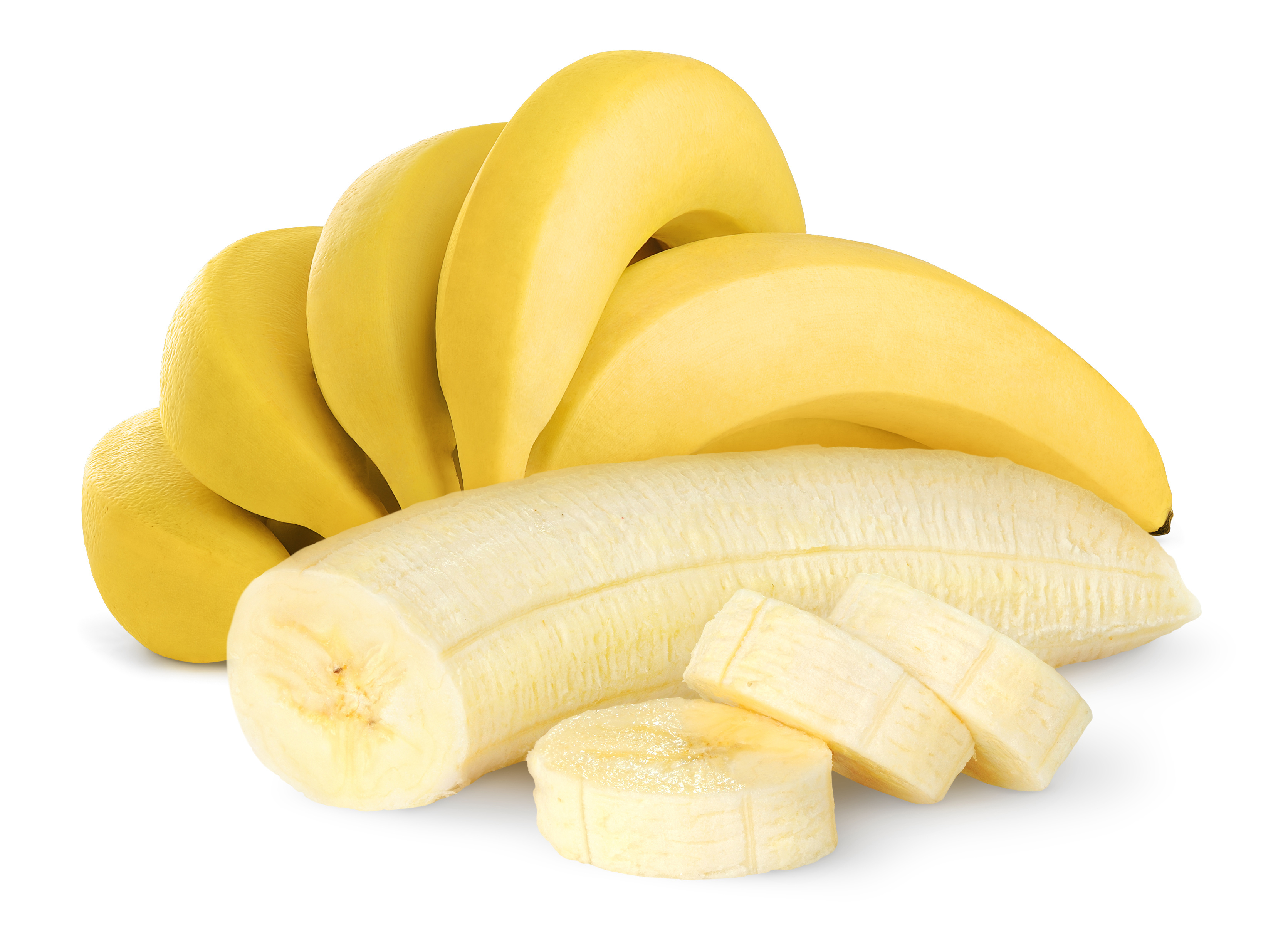
3. Bananas

http://romanlosangelez.files.wordpress.com/2014/01/banana2.jpgHealth benefits: Lowers blood pressure, helps reduce incontincene, relieves menstrual cramps, regulates blood pressure, promotes bone health

Bananas have a lot of health benefits. To illustrate, it prevents the bones from becoming thin and weak. Additionally, according to a study, fresh bananas protect the stomach from developing wounds or even ulcers. That is because bananas promote the production of a thicker mucus that prevents stomach acids. Bananas are also helpful for elimination problems and diarrhoea. By containing a high amount of pectin and fiber, bananas help normalize the movement of the digestive tracts and therefore ease constipation. Consuming three or more fruits per day reduces the risk of age-related vision loss. Especially bananas are fruit that protect your eye sight.


4. Whole grains

http://www.jessainscough.com/wp-content/uploads/2011/05/wholegrains.jpgHealth benefits: Increase concentration, ideal for losing weight

Whole grains like wheat, oats, einkorn or quinoa are ideal for losing weight. When trying to lose weight, products like whole wheat flour, bread or pasta can be really helpful. What's more is that whole grains boost concentration, especially when you have whole grain cereals for breakfast. It helps you to stay focused. Skipping breakfast results in poor concentration and fatigue, so try to have breakfast every day. In addition, whole grains reduce the risk of diabetes.

Quinoa: Quinoa is packed with proteins, magnesium and iron and a grain crop that is easily digestible. What's more is that Quinoa is gluten-free and helps relieve migraines. The NASA considered Quinoa an optimal crop for long-duration space flights.

Oats: Oats is a cholesterol-lowering grain that consist of calcium, magnesium and other essential vitamins. Basically, oats lack gluten. They are, however, grown next to wheat and other grains so that they are contaminated with glutens. So officially, oats is a gluten-containing crop.

Tip: What about starting the day with a healthy and delicious porridge?


5. Yogurt

http://cdn1.scdlifestyle.com/wp-content/uploads/2010/08/how-to-make-yogurt-1.jpgHealth benefits: Helps relieve indigestion, prevents osteoporosis

Yogurt is rich in bacteria and calcium that helps your stomach digest and reduce constipation and diarrhoea. Along with that, yogurt lowers the risk of osteoporosis, which is an illness that weakens bones and increases the risk of unexpected fractures. Combined with vitamin D, yogurt has a positive effect on bone mass. Vitamin D can be found in eggs, oily fish like sardines and salmons or powdered milk. In some yogurts, vitamin D is already added.

Tip: Enjoy your yogurt with fruit as they contain a lot of vitamins and add a pleasing taste.


6. Maca

http://www.organicmeetsgood.com/wp-content/uploads/2013/04/maca-2.jpgHealth benefits: Boosts concentration, prevents sexual dysfunction, promotes fertility

Maca, a root vegetable which looks similar to a radish, helps to balance hormones. Some consider it an aphrodisiac as it might also arouse sexual desire. The root helps women with menstrual problems and prepares them for pregnancy by supplying certain hormones. Moreover, maca serves as an energy and concentration boost.

The plant originally comes from Peru. Some hundred years ago, the Inca consumed maca as a vegetable due to its nutritional values. They boiled, fried, roasted or dried the root and even ate it to prevent lung problems.


http://www.supergreenlandmarket.com/1/wp-content/uploads/2012/12/leafy-greens.jpg 7. Leafy greens

Health benefits: Boosts concentration, prevents cell damage

Leaf vegetables such as broccoli, spinach, lettuce, arugula, asparagus or cabbage are brimming with fiber and vitamin E. They help you to keep mentally focused and prevent your brain cells from damage. Leafy greens are low in calories and fat and high in proteins, magnesium and other vitamins. Especially spinach, which is known to be Popeye the Sailor's favourite vegetable, is rich in iron, calcium and other nutrients. Also cabbage is good for your digestion and heart and is believed to lower the risk of cancer. Generally speaking, leafy greens are very low in calories. One-half cup of cabbage, for instance, contains only 15 calories.

Tip: If you're not really fond of leaf vegetables, try to add them to dishes that you like. You might also want to try out new vegetables like Swiss chard, mustard greens, bok choy, celery, watercress, ...


8. Garlic

http://detoxforlife.biz/wp-content/uploads/2014/04/garlic.jpgHealth benefits: Relieves common colds, protects blood cells, prevents sexual dysfunction

Garlic, also known as "the stinking rose" due to its pungent smell, reduces the chance of catching a cold and also helps to recover from a cold. What's more is that garlic boosts your mood and improves sexual performance. Besides, garlic is a great source or vitamin C and able to keep your blood pressure under control. By protecting your blood cells and vessels it prevents you to suffer from inflammatory.

Tip: It's most effective when you eat garlic raw.


9. Fish & Seafood

http://instantpot.com/wp-content/uploads/2009/06/sea-food.jpgHealth benefits: Relieves common cold, relieves migraine, prevents sexual dysfunction

Fish and seafood strengthen your immune system and lessens the frequency of catching a cold. When having a cold or the flu, oily fish like salmon, mackerel and tuna help a lot. Fatty fish like sardines, herrings and trouts, however, reduce the frequency of migraines. Since Inuits have low levels of heart diseases, eating fish regularly might protect the heart and lower the amount of cholesterol. As you might know, fish contain Omega 3 which lowers the chance of inflammations, protects against Alzheimer and recudes the symptoms of ADHD.

Shellfish: By containing a great amount of vitamin B12 and zinc, shellfish reduce the risk of miscarriage.

Oysters: Oysters are rich in zinc and therefore also considered as a aphrodisiac.


10. Nuts

http://www.nutstop.com/media/catalog/product/cache/1/image/9df78eab33525d08d6e5fb8d27136e95/d/e/deluxe-mixed-nuts-roasted-unsalted.jpgHealth benefits: lessens sleep problems, prevent coronary heart diseases

Nuts are loaded with vitamins which reduce the chance of suffering from a coronary heart disease. Most nuts might possibly be able to lower the risk of cancer, but that's not scientifically proven yet.
Walnuts: Especially walnuts improve the quality of sleep. Additionally, the fruit helps the body to protect itself against Parkinson, Alzheimer or type-II diabetes. Some important vitamins in walnuts cannot be found in any other food, which makes this kind of fruit quite special.
Almonds: While being rich in vitamin E, magnesium and calcium, almonds lower cholersterol and the risk of suffering a heart disease.

Tip: It's healthier to eat them raw and with the skin as more than 90% of the vitamins are found in the nuts' skins.

-

image source (1): http://www.deltalabsusa.com/assets/client_files/images/Photos/Food%20and%20Drink/green-tea.jpg
image source (2): http://i247.photobucket.com/albums/gg158/MDA2008/MDA%202011/dark_chocolate.jpg
image source (3): http://romanlosangelez.files.wordpress.com/2014/01/banana2.jpg
image source (4): http://www.jessainscough.com/wp-content/uploads/2011/05/wholegrains.jpg
image source (5): http://cdn1.scdlifestyle.com/wp-content/uploads/2010/08/how-to-make-yogurt-1.jpg
image source (6): http://www.organicmeetsgood.com/wp-content/uploads/2013/04/maca-2.jpg
image source (7): http://www.supergreenlandmarket.com/1/wp-content/uploads/2012/12/leafy-greens.jpg
image source (8): http://detoxforlife.biz/wp-content/uploads/2014/04/garlic.jpg
image source (9: http://instantpot.com/wp-content/uploads/2009/06/sea-food.jpg
image source (10): http://www.nutstop.com/media/catalog/product/cache/1/image/9df78eab33525d08d6e5fb8d27136e95/d/e/deluxe-mixed-nuts-roasted-unsalted.jpg

Thursday, April 24, 2014

We love Pizza! But what about Pizza Cake?

Have you ever heard of the Pizza Cake? Neither have I - until I read an article about it some hours ago.

The Canadian pizza chain Boston Pizza launched a voting called The Pizza Game Changers. Their purpose is to invent a new creative dish that is somehow related to pizza. People can go to the Pizza Game Changers' website and vote on an invention they like. The product that wins the competition will be produced by Boston Pizza. You should definitely check out their website. They have a lot of crazy ideas, and one of them is the Pizza Cake.


Behold...


Basically, the Pizza Cake is a multilayered cake made of pizza. According to the Pizza Game Changers, their invention is "great for birthdays, bar mitzvahs, weddings and even lonely nights watching infomercials". By having more than 22,000 votes, the Pizza Cake is on the very top position in the Pizza Game Changers' ranking. The fame of the Pizza Cake even resulted in a crash of the Pizza Game Changers' website. How bizzare is that?

The cake is six inches high (15.2 cm) and has more than 5,000 calories. Despite the calories, I would like to try it. In the first place, the amount of calories sounds shocking but it's not that surprising since the cake has six tiers. What about you? Does it look appealing to you? I think it's well worth trying. As soon as it's produced, of course!

image source: http://www.ctvnews.ca/polopoly_fs/1.1782774!/httpImage/image.jpg_gen/derivatives/landscape_620/image.jpg

Wednesday, April 23, 2014

Spanish in the United States

Spanish is the most spoken non-English language in the United States. Some 37.6 million Americans speak Spanish. Among these Spanish speakers, there are 34.8 million Hispanics while 2.8 million are non-Hispanics who still speak Spanish at home every day. The next most spoken non-English languages in the U.S. are Chinese, Hindi and French.

http://www.pewresearch.org/files/2013/08/FT_Non_English1.png

History

The Spaniards set foot in what is today the U.S. long before the English did. In 1565, they founded a colony in Florida which is nowadays considered as the first permament Spanish colony in North America.

Between 1803 and 1804, when Louisiana was sold to the U.S. (the Louisiana Purchase), its Spanish (and French) inhabitants became citizens of the States, but continued to speak their mother tongue.

In the Mexican-American War (1846-1848), Mexico lost almost half of their territory to the United States, including today's Texas, Colorado, Arizona, New Mexico, Wyoming, California, Nevada and Utah. The Mexicans, who were Spanish-speakers, became U.S. citizens. The constitutional convention of 1872 wanted the very little remaining Spanish-speakers to learn English and therefore published all official documents only in English.

In 1898, Cuba, Puerto Rico, the Philippines and Guam became American territories (Spanish-American War). A few years later, Cuba became independent again, while Puerto Rico remained a territory of the United States. Today, the most-spoken language of Puerto Rico is Spanish, although its inhabitants are U.S. citizens.

The number of Spanish immigrants to the United States has skyrocketed within the recent years. The Spanish-speakers have especially settled in California, Arizona, New Mexico, Texas and the southern part of Florida. During the Mexican Revolution from 1910 to 1917, a number of Mexicans flee to the U.S. Also Cubans immigrated to the U.S. due to Cuba's political instability around 1959. In the 1970s and 80s, lots of Spanish-speaking Nicaraguans moved to the U.S. because of the political instability of Nicaragua. Due to economic and political problems in El Salvador, a great number of Salvadorans relocated to the U.S. Also Venezuelans settled in the U.S. as they were hoping for a better education.


File:Spanish in the United States by countr.gif

American words derived from Spanish

  • Cafeteria (cafetería; in Spanish there's an accent on the "i")
  • Chocolate (from Nahuatl xocoatl [Nahuatl = the most-spoken indigenous language of Mexico])
  • Guitar (guitarra)
  • Peninsula (same word in Spanish)
  • Bodega (a New Yorker would use this word to describe a corner store)
  • Canibal (Christopher Columbus came across an indigenous group called the Caribs (who gave the Caribbean its name). He pronounced their name wrongly by calling them caniba. Caniba became caníbal in Spanish and cannibal in English.)
  • Cargo (derived fom the Spanish verb cargar which means to carry)
  • Cilantro (Americans might also call it coriander)
  • Ranch (derived from the Spanish word rancho)
  • Rodeo (same word in Spanish; derived from the verb rodear, meaning to encircle)
  • Florida (means land full of flowers in Spanish)
  • California (the word was first used to describe the North American territory in the 16th century)
  • Montana (a mispronunciation of montaña which means mountain in Spanish)
  • Nevada (means snow-capped peak in Spanish)
  • Alcatraz (is the Spanish name for a bird; in English known as the Northern Gannet)
  • Colorado (means colorful in Spanish)
  • And so on and so forth...

Spanglish

Spanglish is a mixture of Spanish and English and very common among Hispanics, especially in North- and Central America. Still, Spanglish is not considered an official language as it is used in spoken and informal conversations. There is a number of dialects which differ from one another.

A bilingual speaker can either switch between English and Spanish within a sentence (code switching) or create new words and idioms by adopting words into another language. wikipedia gives the following two examples:
  1. code switching: "I'm sorry I cannot attend next week's meeting porque tengo una obligación de negocios en Boston, pero espero que I'll be back for the meeting the week after" (I'm sorry I cannot attend next week's meeting because I have a business obligation in Boston, but I hope to be back for the meeting the week after).
  2. adaptation of words: the Spanish verb llamar (to call) becomes telefonear (telephone+ar) or almorzar (to eat lunch) becomes lunchear (lunch+ar). wikipedia gives other examples like: watchear, parquear, emailear, twittear, etc.


image source (1): http://www.pewresearch.org/files/2013/08/FT_Non_English1.png 
image source (2): http://upload.wikimedia.org/wikipedia/commons/thumb/2/29/Spanish_in_the_United_States_by_countr.gif/800px-Spanish_in_the_United_States_by_countr.gif 
image source (3): http://i.huffpost.com/gadgets/slideshows/322446/slide_322446_3046050_free.jpg
image source (4): http://i.huffpost.com/gadgets/slideshows/322446/slide_322446_3043041_free.jpg

Monday, April 21, 2014

Happy Easter, Everyone!

Every country has their own traditions and ways of celebrating Easter. Some have a huge feast at home, some have to search for their Easter eggs in a basket somewhere outside and some play funny games. The White House in Washington, D.C organizes a very amusing game, for example...


The White House Easter egg roll


The White House Easter egg roll is a game played on Easter Monday on the lawn of the White House. The goal of the game is to push hard-boiled eggs down a track made of wooden sticks very quickly. The contestant who has pushed their egg fastest is the winner. Children and their parents use a sizable spoon for pushing the eggs. Unless the eggs are broken, they are eaten after the game.

http://www.thedesertreview.com/wp-content/upLoads/2013/03/white-house-egg-hunt-eg-01_photoblog900.jpgThe White House Easter egg roll was introduced in 1814 by the wife of President James Madison, Dolley Madison. Originally, they played on the grounds of the United States Capitol until President Rutherford B. Hayes brought the event to the lawn of the White House. Franklin D. Roosevelt forbid the games during his term in office. Mamie Eisenhower, the wife of Dwight. D. Eisenhower, revived the games and even opened the event to black children for the very first time. Same-sex couples were first invited to join the games by Barack Obama in 2009.

During the game, there are famous persons of the White House in the guise of various movie characters strolling around and Cabinet secretaries are reading to the children.

http://upload.wikimedia.org/wikipedia/commons/3/37/Barack_Obama_at_this_2009_White_House_Easter_Egg_Roll.jpg The tradition of egg rolling also exists in Denmark, Germany, Lithuania and Egypt. Yet every tradition is individual. In Denmark, for instance, the eggs are rolled down a hill. Whose egg rolls furthest wins the game.

Legend relates that Egg rolling became a symbol of the rolling away of the rock from Jesus' tomb before he resurrected. The Easter egg roll was brought to North America by the European settlers.


These were the highlights of the White House Easter egg roll of 2013:


Wish you all a very Happy Easter,
a joyful time and looots of chocolate and candies!


image source (1): http://www.wh.gov/sites/default/files/image/eer/eggs_0.jpg
image source (2): http://www.thedesertreview.com/wp-content/upLoads/2013/03/white-house-egg-hunt-eg-01_photoblog900.jpg
image source (3): http://upload.wikimedia.org/wikipedia/commons/3/37/Barack_Obama_at_this_2009_White_House_Easter_Egg_Roll.jpg

Friday, April 18, 2014

Walt Disney's greatest food movie

Hey guys,

How's it going with your blogging?
You may have noticed that I'm an enthusiastic and devoted Disney admirer. I just love love love Disney movies and their cartoons, animations, tales, ... Anyway, since I am such a great fan of Walt Disney, I decided to write about one particular Disney movie. Considering we've learned a lot about food this semester, I am going to emphasize on how food occurs in the film. So let's have a look at one of Disney's masterpieces: Ratatouille.

Ratatouille

The movie tells the story of a tiny rat who happens to have a highly developed sense of smell. The father makes use of his son's gift and obliges him to sniff at all the garbage first before the other rats eat it. The tiny little rat called Remy feels used, but can't really escape from his duty. One day he's accidentally seperated from his family. In the first place, Remy is really unhappy and sad about his loss. After a while, however, he realizes that this is his chance to finally pursue his passion. He finds himself in Paris' most eminent restaurant: Gusteau's.
After sneaking into Gusteau's kitchen, Remy tries to get an overview by watching all the kitchen staff from a cupboard. Remy catches Linguini, who's only duty is to wash the dishes, secretly adding random herbs and spices to a soup. On account of the rat's unique sense of smell, the animal tries to save Linguini's a** by adding some other herbs. Linguini, the dishwasher, spots the rat adding the ingredients, which is how they get to know each other:


As the rat is the one with the highly developed sense of smell and Linguini's not, they begin to work as a team. Initially, Linguini is quite sceptical and uncertain about cooperating with a rat, until one day Remy prepares French Omelette for both of them for breakfast. Mixing eggs, butter, cheese and herbs is not that simple for a tiny rat like Remy. Linguini realizes that Remy knows a lot about cooking and that his gift might be useful for him working at Gusteau's.

http://moviesfilmsmotionpictures.files.wordpress.com/2009/06/ratatouille-making-omelette-hd-desktop-mobile-wallpaper.jpg
Wearing the rat under his hat, Linguini does the actual cooking while the rat guides him by pulling his hair. Their plan works perfectly until the chef notices that Linguini's not the one with the great knowledge of cooking. Though, the chef has no evidence to proof that Linguini is cooperating with a rat.
Linguini finds out he's Gusteau's son and therefore the legal heir of the restaurant. When he becomes chef of the restaurant, Linguini reveals his big secret. He tells the kitchen staff about Remy being the actual cook, whereupon his colleagues disappointedly abandon the restaurant and leave the successful duo behind...

Why the movie is called Ratatouille

One of the main characters of Ratatouille is the critic. Every now and then he pays the restaurant a visit in order to test their food and thereupon write a review. When Linguini finally takes over the restaurant, his goal is to serve a unique and delightful meal to the critic.

http://girleatsgreen.files.wordpress.com/2012/06/picture-21.pngLinguini can't really think of something, but Remy (called little chef) has an excellent idea. They prepare Ratatouille! Ratatouille is a vegetarian dish and consists of zucchini, eggplant, pepper, tomatoes, tomato paste, garlic, rosemary, thyme, sage, onion and olive oil. Just look at the photo on the left where little chef is wearing a toque and pours sauce over the dish. Doesn't that Ratatouille look delicious? Do you think the critic will like the dish? If so, whom will the critic congratulate if the actual cook is a rat?


image source (1): http://www.tumblr.com/photo/1280/kafka-on-the-shore/150418645/1/hFiUi53rXqfamdswd9MGoXMF
image source (2): http://moviesfilmsmotionpictures.files.wordpress.com/2009/06/ratatouille-making-omelette-hd-desktop-mobile-wallpaper.jpg
image source (3): http://girleatsgreen.files.wordpress.com/2012/06/picture-21.png

Thursday, April 3, 2014

How to Place Someone in Recovery Position

Hey guys,

File:Recovery position.svg
Are you making good progress with studying for PC1? I'm getting on well, but I'm definitely out of practice when it comes to giving advice and instructions. In order to do well on this part of PC1, I am now going to give you instructions how to place someone in recovery position. In case you're not familiar with that phrase at all, maybe the image on the right hand side will be a help. Doens't ring a bell? Maybe you'll remember while reading through the instructions.

image source: http://upload.wikimedia.org/wikipedia/commons/thumb/3/31/Recovery_position.svg/800px-Recovery_position.svg.png

--

Introduction

The recovery position is a basic first aid treatment that you've certainly come across in a first aid course. You might remember the recovery position as an easy practice. There are a couple of niceties though that I'd like to make you aware of.

Indication

A person that is unconscious must be placed in recovery position in order to avoid the person from suffocating. When someone becomes unconscious, their muscles are no longer able to let the person swallow. As a result, the person would swallow their own vomit in case he or she throws up. Additionally, someone can suffocate from the tongue falling back into the airway. Surely we don't want that to happen, which is why we place the person in recovery position.

First approach

The best thing to find out if a person is unconscious is to address the person by asking if everything is alright. In case the person doesn't answer, you can assume that he or she is either asleep, unconscious or, in the worst case, not breathing at all. In former times people used to lightly hurt someone by pinching their hand. Please note that this practice is no longer in use. Instead, it would be a good idea to grab the person's shoulder and simply shake it once or twice. If they are still not responding, call 144 (or 9-1-1 in the U.S.) or tell someone else to do so. Subsequently, knee down next to the person in case you haven't done that already. Before checking if the person's still breathing, you need to use a certain technique that is called the head-tilt chin-lift maneuver. The clue is in the name. To make use of this maneuver, place one hand on the person's forehead and your fingers of the other hand on the chin. Push the forehead down and lift up the chin. By doing so, you ensure that the patient's airway are not obstructed by their tongue falling back. Please remember that the head-tilt chin-lift maneuver can unly be used if you are a 100% sure that the patient does not have any neck injuries.
Come closer to the person's head in order to hear whether they are breathing or not. At the same time, look towards the person's stomach so as to make out any breathing movement. It would be adivsable to do that at least for 10 seconds. If there is no breathing at all, start with a CPR immediately. In case the person is still breathing, place him or her in recovery position.

The recovery position

Unless the patient has an obvious neck injury, he or she MUST be placed in recovery position. To do so, be sure the patient lies on the back. Place one arm 90° away from the body. Then, grasp the patient's second arm as well as the leg of the same half of the body. By holding arm and leg, gently turn the person onto the side where the other arm lies. If I were you I'd ask someone to grasp the patient's head and turn it to the same side and at the same pace you turn the patient's body. Make sure the leg you just moved is bent. We don't want the patient to roll onto the stomach, do we? Not only should you bend the leg, the arm you just turned to the side should be bent as well. Following that, use the head-tilt chin-lift maneuver one more time with the aim of letting the patient inhale and exhale properly. Additionally, you can place the hand that's lying on top under the patient's cheek. Consequently, the patient will be in an absolute stable position.

The best thing to do while waiting for the ambulance is to stay close to the patient. You might want to check the breathing every three or four minutes. In rare cases the patient's condition may deteriorate, which is why checking whether the patient's still breathing is a must. Generally speaking: Take care not to become anxious or even panicky. There's nothing that could go amiss, so try to stay calm and think clearly.

--

Any questions on that? Feel free to add a comment or ask me in person.